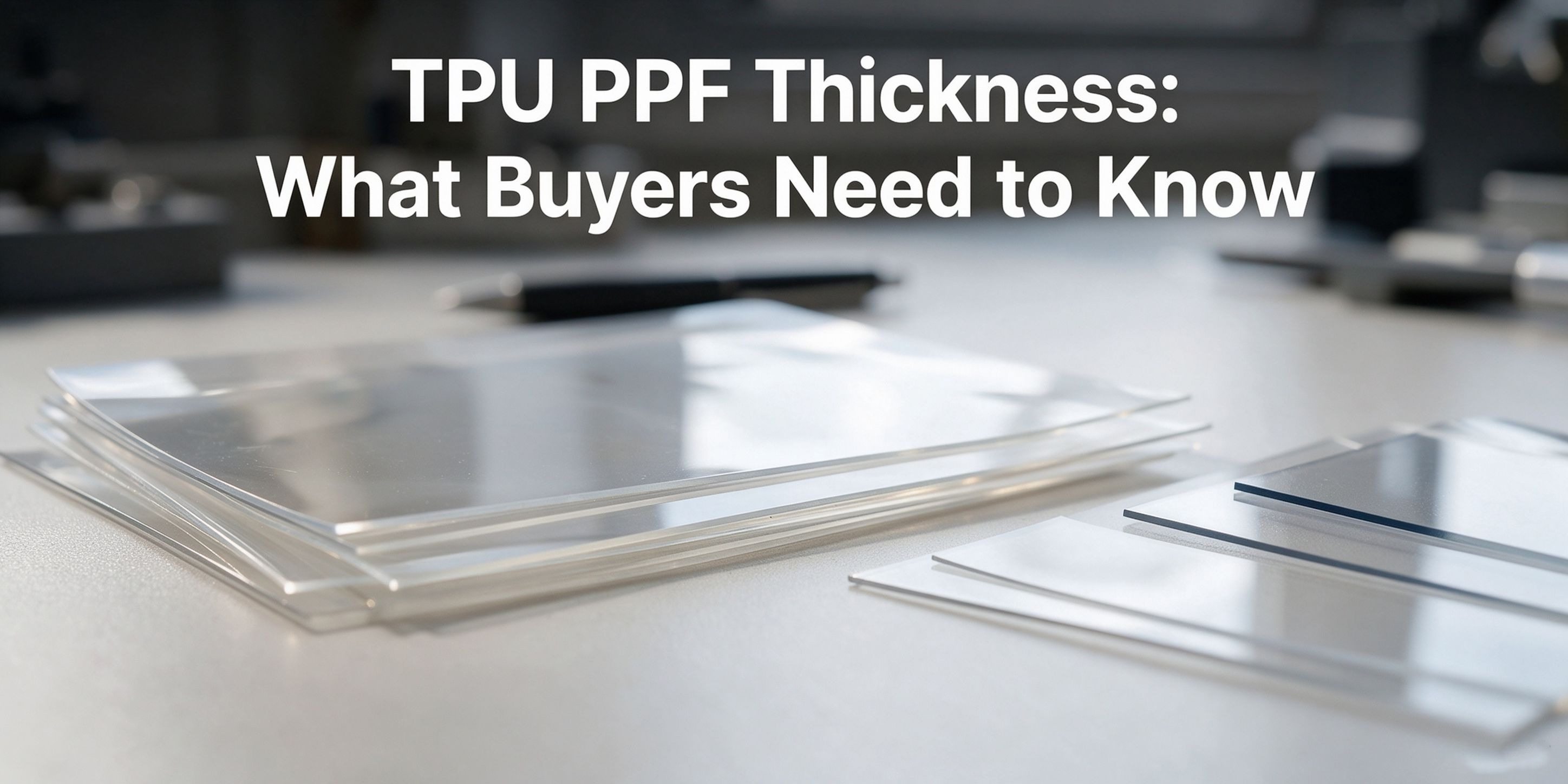
TPU PPF Thickness: What Buyers Need to Know
Quick Answer: What TPU PPF Thickness Should You Choose?
TPU paint protection film (PPF) is available in different thickness specifications, commonly expressed in mil or microns (µm). The right specification depends on the product's construction, intended application, installation requirements, and verified performance—not thickness alone.
To compare PPF thickness accurately, first confirm how the value is measured and which layers it includes. Then consider flexibility, conformity to curved panels, surface properties, and the manufacturer's technical information.
For distributors, importers, and professional installers, the goal is to choose a film that meets customer requirements and can be evaluated using clear, comparable specifications.
1. What Does Mil Mean in PPF Thickness?
A mil is a unit of thickness equal to one-thousandth of an inch. It is not the same as a millimeter.
The conversion is:
1 mil = 25.4 microns (µm)
Microns are often used in metric specifications, while mil is common in automotive film product descriptions. When comparing quotations or technical data sheets from different suppliers, converting the units helps prevent specification misunderstandings.
Use this formula:
Thickness in microns = thickness in mil × 25.4
For example, a film specified at 7.5 mil is approximately 190.5 µm thick.
TPU PPF Thickness Conversion Table
| Thickness (mil) | Approximate Thickness (µm) |
|---|---|
| 6.5 mil | 165.1 µm |
| 7.0 mil | 177.8 µm |
| 7.5 mil | 190.5 µm |
| 8.0 mil | 203.2 µm |
| 8.5 mil | 215.9 µm |
| 9.0 mil | 228.6 µm |
| 9.5 mil | 241.3 µm |
These values are mathematical conversions, not a ranking of product quality. Always use the actual specification and measurement basis provided for the model you are considering.
2. What Does the Thickness Number Include?
Before comparing two TPU PPF products, establish what the stated thickness actually measures.
A finished paint protection film can contain several layers, such as a topcoat, TPU base film, adhesive, and release liner. Product specifications should clearly identify the measurement basis and which components are included. Do not assume that two suppliers use the same definition of total thickness.
Ask these questions before comparing quotations:
-
Is the figure for the TPU base film or the finished film construction?
-
Are the topcoat and adhesive included?
-
Is the release liner excluded from the stated thickness?
-
Which measurement method is used?
-
Are tolerances or supporting measurement records available?
For example, two products may both be described as 8 mil, but the comparison may not be meaningful if the stated values refer to different layer combinations or measurement methods.
For bulk orders, confirm the agreed specification in the quotation or purchase documentation. This helps both parties evaluate the same product and reduces the risk of misunderstandings.
3. Is Thicker TPU PPF Always Better?
No. A higher thickness number does not automatically mean better overall quality or suitability.
Thickness is one characteristic of the film, and its meaning depends on the full product construction. The topcoat, TPU formulation, adhesive system, manufacturing consistency, and installation behavior also matter.
A thicker film may provide more material, but its suitability should still be assessed under the intended application and installation conditions. A product that is difficult to handle on complex curves may not be the best choice for every installer or vehicle.
Rather than choosing by thickness alone, compare:
-
The exact thickness and measurement basis.
-
Film construction and available product information.
-
Flexibility and conformity during installation.
-
Surface finish and clarity, where relevant.
-
Test evidence for the performance properties that matter to your application.
The best specification is the one that meets your actual requirements and is supported by reliable product information.
4. How Do Different TPU PPF Thickness Specifications Compare?
Different nominal thickness values can help buyers organize product options, but they should not be treated as universal quality grades.
For example, the 6.5 mil, 7.5 mil, 8.5 mil, and 9.5 mil values in the conversion table represent different nominal thicknesses. They do not, on their own, establish how well each film will perform or which one will be easier to install.
When considering alternative specifications, ask the supplier to explain the purpose of each option and provide model-specific information. Where available, compare samples under consistent installation conditions.
A useful comparison should answer three questions:
-
What is the exact construction and thickness measurement basis?
-
What product features and supporting evidence distinguish the options?
-
Which specification is appropriate for your customers, installers, and target market?
This method is more useful than assuming that moving to a thicker product will automatically deliver a better result.
5. Product Specification Example: Clear PPF and Color PPF
Thickness specifications should always be tied to the exact product model and construction.
The product training specifications available for this guide list the following examples:
| Product Type | Listed Thickness | Listed Roll Dimensions |
|---|---|---|
| Transparent TPU PPF | 6.5–9.5 mil | 1.52 × 15 m |
| Colored PPF | 7.5 mil | 1.52 × 15 m |
These figures are product examples, not a universal standard for clear or colored PPF. Specifications can differ by model and product series.
Before using these figures for purchasing or resale, confirm the current product data sheet, the exact model, and the thickness measurement basis. Make sure the quoted dimensions and specifications match the product you intend to order.
For distributors, having an accurate, model-specific specification sheet makes it easier to compare products, prepare quotations, and answer customer questions.
6. What Else Should You Evaluate Alongside Thickness?
Thickness should be considered together with other product characteristics.
Film Construction
Ask how the film is constructed and which layers are included in the stated thickness. Confirm the details for the actual model rather than relying on a broad category description.
Topcoat and Surface Properties
If a product is described as having self-healing, stain resistance, or other surface features, check what the claim means and which supporting information is available. Do not assume these features are determined by thickness.
Adhesive and Installation Behavior
Ask for installation guidance and, where possible, assess a sample with an experienced installer. Handling, conformity, and edge finishing can be important when deciding whether a product suits your application.
Technical Documents and Testing
Review the available technical data sheet and relevant test reports. Confirm that the documents identify the product being evaluated and that their results relate to the properties you need to compare.
Warranty and Commercial Terms
Check the warranty for the exact model, including its duration, coverage, exclusions, and claims process. Also confirm roll dimensions, minimum order quantity, lead time, and delivery terms before purchasing.
Considering these factors alongside thickness gives buyers a more complete basis for comparing PPF products.
7. A Practical TPU PPF Thickness Checklist for Buyers
Before confirming an order, use the following checklist:
-
Confirm the exact product model and nominal thickness.
-
Verify the conversion between mil and microns.
-
Establish which layers are included in the measurement.
-
Ask about measurement methods and tolerances.
-
Compare construction, surface properties, and installation behavior.
-
Request available technical documents and relevant test evidence.
-
Evaluate a sample when possible.
-
Confirm the agreed specification, warranty, and commercial terms in writing.
If a specification is unclear, ask the supplier to clarify it before placing the order. A clear comparison is more valuable than selecting a product based on a single number.
Frequently Asked Questions
How many microns are in 7.5 mil PPF?
A thickness of 7.5 mil equals 190.5 microns (µm), using the conversion 1 mil = 25.4 µm. This is a unit conversion; it does not indicate the quality or performance of the film.
Is 8 mil PPF better than 6.5 mil PPF?
Not automatically. Compare the measurement basis, film construction, installation behavior, and relevant product evidence. Thickness alone is insufficient to determine which product is more suitable.
Does TPU PPF thickness include the adhesive layer?
It depends on the specification definition used for the product. Ask the supplier to state whether the topcoat, TPU base film, adhesive, and release liner are included or excluded from the quoted measurement.
What is a typical thickness range for TPU PPF?
There is no single universal range that applies to every manufacturer and product series. The suitable specification depends on the exact model and application. Always confirm the current product data sheet before ordering.
What thickness should distributors choose for their market?
Start with the needs of your installers and end customers. Compare the available specifications, assess samples when possible, and consider product construction, supporting evidence, supply requirements, and warranty terms before selecting a product range.
Conclusion: Compare Specifications, Not Just Numbers
TPU PPF thickness is an important purchasing specification, but it should never be considered in isolation. Buyers need to understand mil-to-micron conversion, confirm what the thickness measurement includes, and evaluate the film's construction and suitability for the intended application.
For distributors, importers, installers, and automotive film brands, model-specific documents and clear written specifications make it easier to compare options and avoid purchasing misunderstandings.
If you are evaluating TPU PPF for distribution, professional installation, or a private-label project, contact Guangdong Aici New Materials Co., Ltd. to discuss your requirements and request available product information. Sharing your target market, intended application, required thickness, and estimated order quantity will help the team understand your needs and review suitable options.
How to Evaluate PPF Samples Before Placing a Bulk Order
What Should Buyers Check in TPU PPF?