Inside AICI TPU Color PPF: Understanding Its 7-Layer Structure

However, understanding a color PPF product requires more than looking at its color or surface finish. Buyers should also understand the materials behind the film, the role of each layer, and how the overall construction affects the product.
At AICI, our TPU Color PPF features a seven-layer structure, combining PET protective materials, surface coating, transparent TPU layers, a nano ceramic color layer, and an adhesive system.
In this guide, we will take a closer look at each layer and explain how they work together.
1. AICI TPU Color PPF: Seven-Layer Structure at a Glance
AICI TPU Color PPF consists of seven layers, arranged from the outer surface to the bottom release liner:
-
PET Protective Film
-
Hydrophilic or Hydrophobic Coating
-
Transparent TPU Layer
-
Nano Ceramic Color Layer
-
Transparent TPU Layer
-
Adhesive Layer
-
PET Release Liner
Each layer has a different role. Together, they form the complete TPU Color PPF structure.
2. Understanding the Function of Each Layer
Layer 1: PET Protective Film
The outermost layer is a PET protective film.
Its main purpose is to protect the film surface during production, packaging, transportation, and handling before installation.
This layer helps reduce the risk of surface contamination and unwanted contact during storage and preparation.
The PET protective film is removed during the installation process. It is not a permanent part of the installed film.
Layer 2: Hydrophilic or Hydrophobic Coating
Below the PET protective film is the surface coating.
Depending on the selected product configuration, the coating can be hydrophilic or hydrophobic.
These two coating types interact with water differently.
Hydrophilic Coating
A hydrophilic surface allows water to spread more evenly rather than forming highly rounded droplets.
This type of coating may be considered for applications where water spreading and resistance to localized water spot formation are important.
Hydrophobic Coating
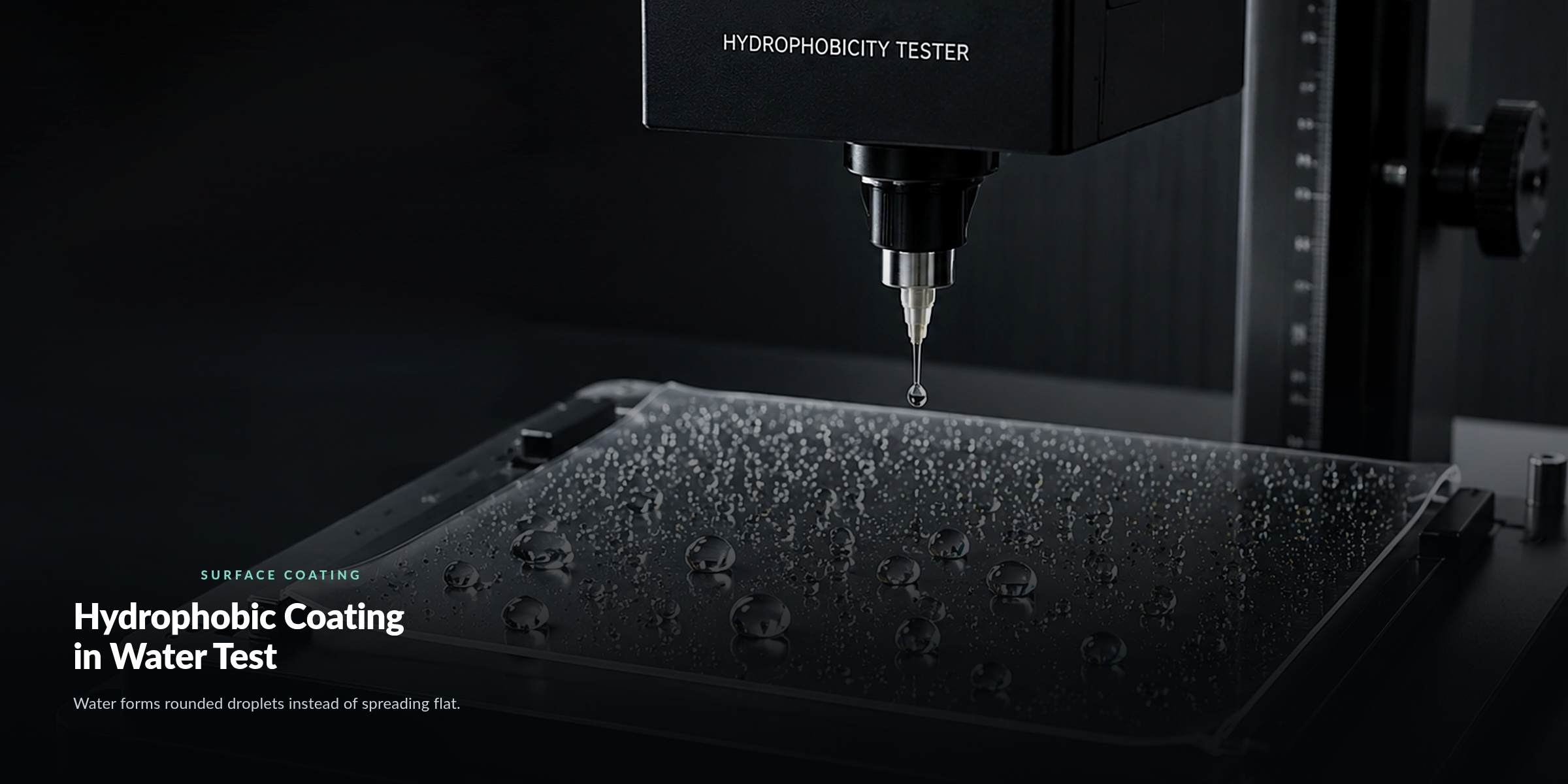
A hydrophobic surface encourages water to form droplets and roll away more easily.
Its typical characteristics include:
-
Water beading behavior
-
Easier surface cleaning
-
Reduced tendency for dirt and water to remain on the surface
-
A surface appearance associated with gloss and water repellency
The two coating types serve different purposes. The appropriate choice depends on the intended product configuration and the customer's market requirements.
Layer 3: First Transparent TPU Layer
The first transparent TPU layer is positioned beneath the surface coating and above the color layer.
It forms part of the TPU base structure and provides a transparent material layer within the film construction.
Its transparency is important because the color effect is created by the dedicated color layer underneath, rather than by simply using an opaque colored surface.
Layer 4: Nano Ceramic Color Layer
The nano ceramic color layer is the key layer responsible for the film's color appearance.
It is positioned between two transparent TPU layers.
This construction allows the color layer to be integrated into the film structure rather than being treated as a simple surface decoration.
For distributors and automotive film brands, the color layer is particularly important when evaluating:
-
Available color options
-
Color consistency
-
Visual appearance under different lighting conditions
-
Whether the selected color matches the target market's preferences
Different color options can give vehicles distinct visual identities, making TPU Color PPF an additional product category for automotive film businesses.
Layer 5: Second Transparent TPU Layer
Another transparent TPU layer sits beneath the nano ceramic color layer.
Together, the two transparent TPU layers enclose the color layer within the product structure.
This is an important feature of AICI's TPU Color PPF construction: the color layer is integrated between TPU layers instead of being exposed as the outermost colored surface.
Layer 6: Adhesive Layer
The adhesive layer is located beneath the TPU-based film structure.
It connects the film to the vehicle's painted surface during installation.
For buyers, adhesive performance is an important consideration when evaluating automotive film products.
Relevant factors include:
-
Initial tack and positioning during installation
-
Adhesion after application
-
Compatibility with the intended installation process
-
Removal behavior under appropriate conditions
AICI's product structure diagram identifies an adhesive layer of approximately 0.5 mil.
The adhesive specification and performance should always be evaluated against the relevant product model and technical documentation.
Layer 7: PET Release Liner
The bottom layer is the PET release liner.
Its main purpose is to protect the adhesive before installation.
It helps prevent unwanted contact, contamination, and premature adhesion during storage and handling.
Unlike the outer PET protective film, the release liner is positioned on the adhesive side and is removed when the film is prepared for installation.
Although both layers use PET material, they have different positions and functions.
3. Key Product Specifications of AICI TPU Color PPF
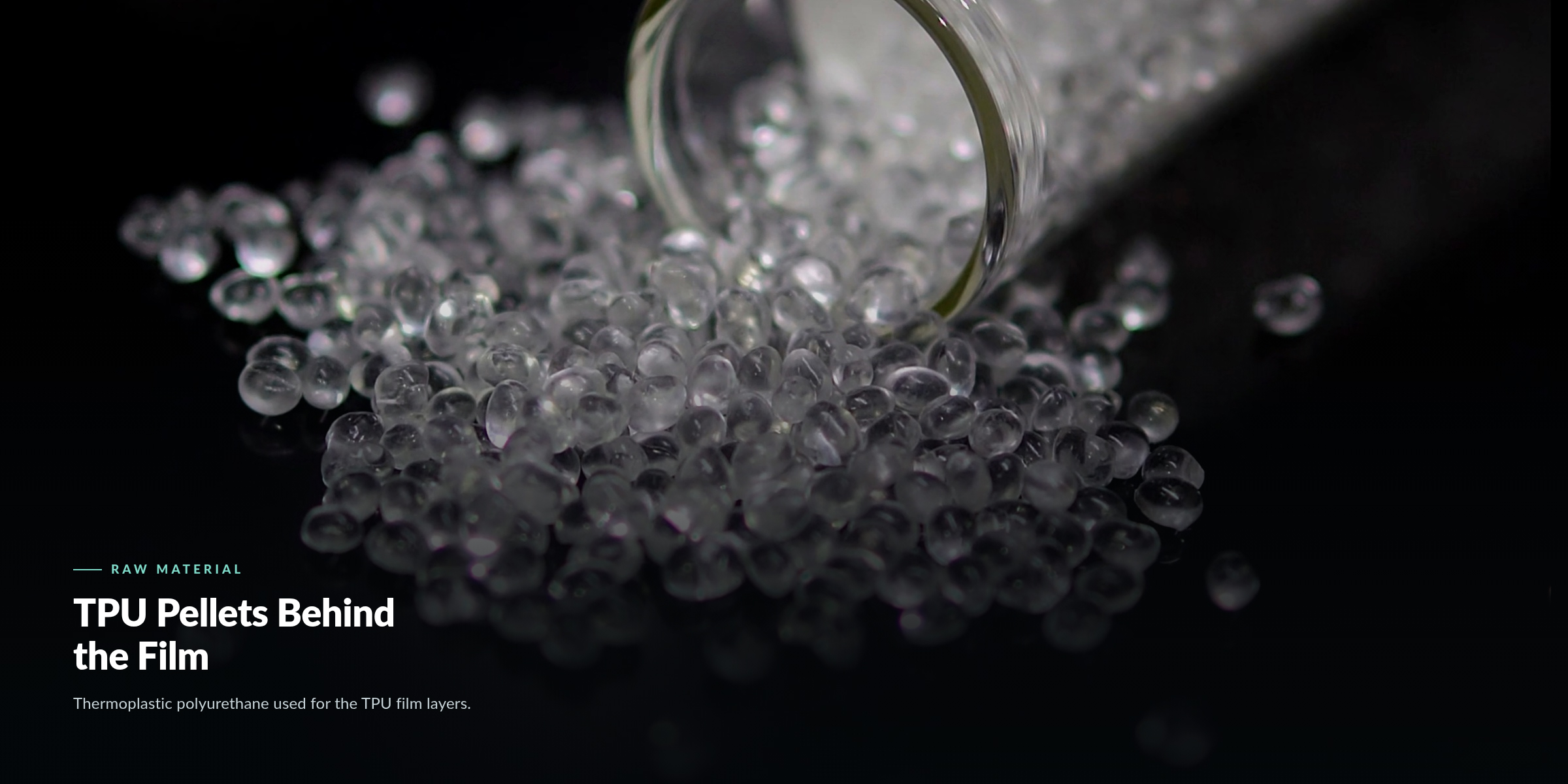
Besides understanding the seven-layer construction, buyers should also review the product's basic specifications.
AICI TPU Color PPF has the following standard specifications:
| Specification | Product Information |
|---|---|
| Product Type | TPU Color Paint Protection Film |
| Total Thickness | 7.5 MIL |
| Roll Width | 1.52 m |
| Roll Length | 15 m |
| Roll Size | 1.52 × 15 m |
| Application | Automotive Body Covering |
The specifications above describe the product configuration. Buyers should confirm the exact model and technical documentation before placing an order.
4. Why Does the Seven-Layer Structure Matter?
When sourcing TPU Color PPF, it is easy to focus only on color, gloss, or price per roll.
However, the internal construction also deserves attention.
1. Different Layers Have Different Functions
The PET protective film, coating, TPU layers, color layer, adhesive, and release liner each serve a specific purpose. Understanding their roles gives buyers a clearer picture of the product.
2. The Color Layer Is Integrated into the TPU Structure
AICI's construction places the nano ceramic color layer between two transparent TPU layers. This is an important structural feature when distinguishing TPU Color PPF from conventional color change films.
3. Surface Coating Options Matter
Hydrophilic and hydrophobic coatings offer different water interaction characteristics. Buyers should confirm which coating option is available for the specific model they are considering.
4. Product Specifications Should Be Evaluated Together
Thickness, roll dimensions, adhesive information, coating type, and color appearance should be considered together rather than evaluating a product based on one specification alone.
5. What Should Buyers Check Before Purchasing TPU Color PPF?
For distributors, wholesalers, and automotive film brands, the following checks can make product evaluation more practical:
-
Layer construction: Ask the manufacturer for a clear explanation of the film structure.
-
Coating type: Confirm whether the selected product uses a hydrophilic or hydrophobic coating.
-
Color samples: Compare the actual color and surface appearance under different lighting conditions.
-
Product specifications: Confirm total thickness, roll dimensions, and adhesive information.
-
Sample evaluation: Request samples before committing to a bulk order.
-
Manufacturer support: Check whether the supplier can provide product information and OEM/ODM cooperation.
A product's structure provides useful information, but samples and model-specific documentation are still important before making a purchasing decision.
6. AICI TPU Color PPF for Automotive Film Businesses
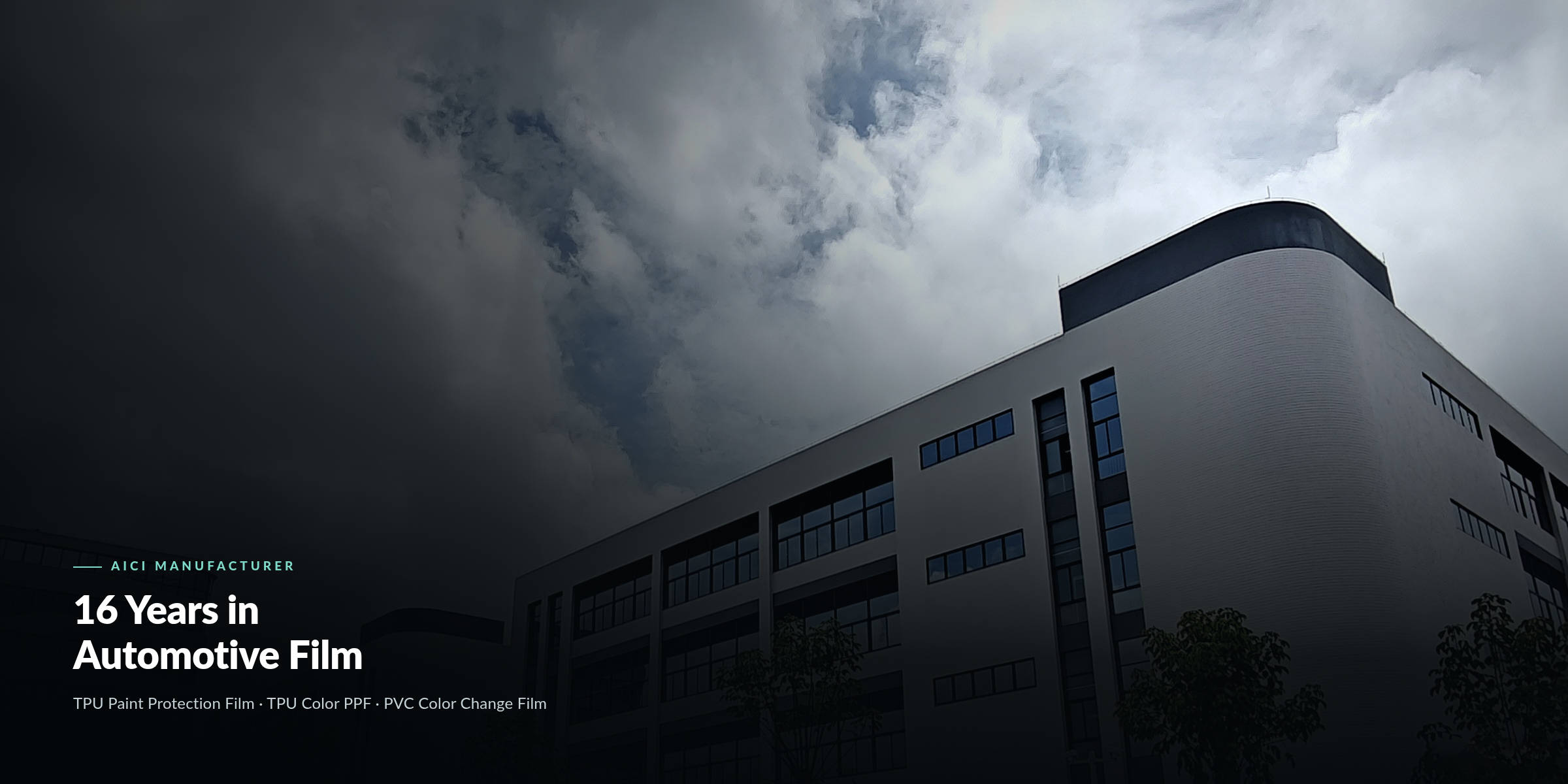
AICI is a Chinese automotive film manufacturer with 16 years of industry experience.
Our product range includes TPU Paint Protection Film, TPU Color PPF, and PVC Color Change Film.
Our TPU Color PPF features a seven-layer construction, combining a surface coating, transparent TPU layers, a nano ceramic color layer, an adhesive layer, and PET protective materials.
For overseas distributors, wholesalers, installers, and automotive film brands, we provide product options for different business requirements and support OEM/ODM cooperation.
Customers can also request free A5 samples to check color and surface appearance before making a bulk purchasing decision. Customers only need to cover the international shipping cost.
If you are interested in our TPU Color PPF collection, contact AICI to discuss available colors, product specifications, and cooperation opportunities.
Frequently Asked Questions
1. How many layers does AICI TPU Color PPF have?
AICI TPU Color PPF has seven layers: PET protective film, surface coating, first transparent TPU layer, nano ceramic color layer, second transparent TPU layer, adhesive layer, and PET release liner.
2. What is the function of the nano ceramic color layer?
The nano ceramic color layer is responsible for the film's color appearance. In AICI's construction, it is positioned between two transparent TPU layers.
3. What is the difference between the PET protective film and PET release liner?
The PET protective film is on the outer surface and protects the film before installation. The PET release liner is on the adhesive side and protects the adhesive before application.
Both are removed during installation preparation, but they serve different purposes.
4. What is the standard thickness of AICI TPU Color PPF?
The standard total thickness listed for AICI TPU Color PPF is 7.5 mil. The standard roll size is 1.52 m × 15 m.
5. Can buyers request samples before placing a bulk order?
Yes. AICI offers free A5 samples for checking color and surface appearance. Customers are responsible for the international shipping cost.
Conclusion
The construction of TPU Color PPF involves more than a colored film surface. Each layer has a specific position and function, from surface protection and coating to the TPU structure, color layer, adhesive, and release liner.
Understanding these seven layers helps distributors, installers, and automotive film brands evaluate products more effectively.
If you are looking for a TPU Color PPF manufacturer for wholesale purchasing or OEM/ODM cooperation, AICI welcomes you to explore our product range and discuss your requirements.
Understanding PPF Coating Technology: Hydrophobic, Hydrophilic and Embedded Coatings
How to Import Paint Protection Film from China: A Step-by-Step Guide for Buyers