Understanding PPF Coating Technology: Hydrophobic, Hydrophilic and Embedded Coatings

When evaluating paint protection film (PPF), buyers often focus on thickness, material, color, and price. However, the coating technology used in a film is also an important part of its overall construction.
Different coating technologies can influence how a PPF surface interacts with water, how it behaves during daily cleaning, and how the surface is designed.
Among the coating concepts discussed in the automotive film industry are hydrophobic coatings, hydrophilic coatings, and embedded coating structures.
Although these terms are sometimes discussed together, they do not describe exactly the same thing. Understanding their differences can help distributors, installers, and automotive film brands evaluate PPF products more accurately.
1. What Is a PPF Coating?
A PPF coating is a functional part of the film's surface system.
Depending on the product design, the coating may be applied to or integrated with the film structure to provide specific surface characteristics.
For example, different coating configurations may influence:
-
Water interaction and surface wetting
-
Surface feel and appearance
-
Resistance to certain types of surface contamination
-
Cleaning and maintenance characteristics
The exact coating composition and manufacturing method vary between manufacturers and product models.
Therefore, buyers should not assume that all PPF products use the same coating materials or construction.
2. Hydrophobic Coating: How Does It Work?
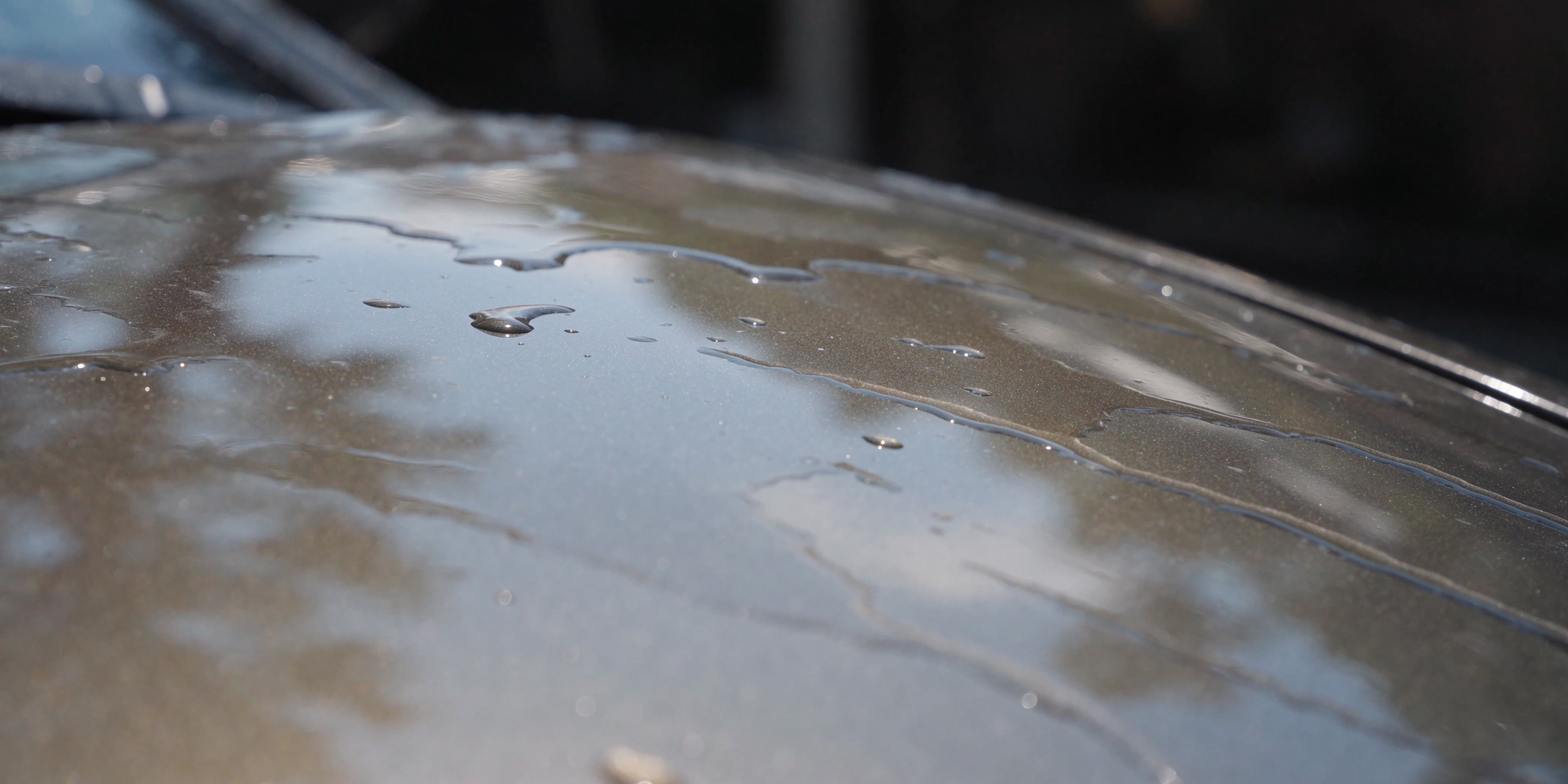
Hydrophobic means water-repellent.
A hydrophobic PPF surface tends to reduce the spread of water across the surface, causing water to form relatively rounded droplets.
This behavior is commonly known as water beading.
Typical characteristics associated with hydrophobic surfaces include:
-
Water forms visible droplets on the surface
-
Droplets may roll away when the surface is tilted
-
Less water may remain spread across certain areas
-
The surface can be easier to rinse under suitable conditions
For vehicle owners, this water behavior can make routine washing and surface maintenance more convenient.
However, water beading alone does not prove that a coating has superior durability or overall quality. Other factors, including contamination, surface condition, and coating wear, can influence the result.
3. Hydrophilic Coating: How Does It Work?
Hydrophilic means water-attracting.
Unlike a hydrophobic surface, a hydrophilic surface allows water to spread more evenly instead of forming highly rounded droplets.
This behavior is commonly described as water sheeting.
Depending on the surface design, hydrophilic coatings may provide:
-
More uniform water spreading
-
Less pronounced water beading
-
Different surface wetting behavior during washing
-
A different approach to managing water on the film surface
Hydrophilic does not automatically mean better or worse than hydrophobic.
The two technologies have different surface characteristics, and the appropriate choice depends on the product design and intended application.
4. What Is Embedded Coating Technology?
Embedded coating refers to a coating concept in which the coating is incorporated into or integrated with a material structure rather than being described only as a conventional exposed surface layer.
In automotive film manufacturing, the exact meaning of embedded coating depends on the manufacturer's formulation and production process.
It is important to distinguish the position and construction of a coating from its chemical surface behavior.
For example:
-
Hydrophobic describes how a surface interacts with water.
-
Hydrophilic describes how a surface interacts with water.
-
Embedded describes how a coating is incorporated into a material or product structure.
An embedded coating may still have hydrophobic or hydrophilic characteristics, depending on its formulation and design.
For buyers, the key questions are how the coating is constructed, where it is located, and what functions the manufacturer claims it provides.
The term alone is not enough to determine the coating's performance.
5. Hydrophobic, Hydrophilic and Embedded Coatings: Key Differences
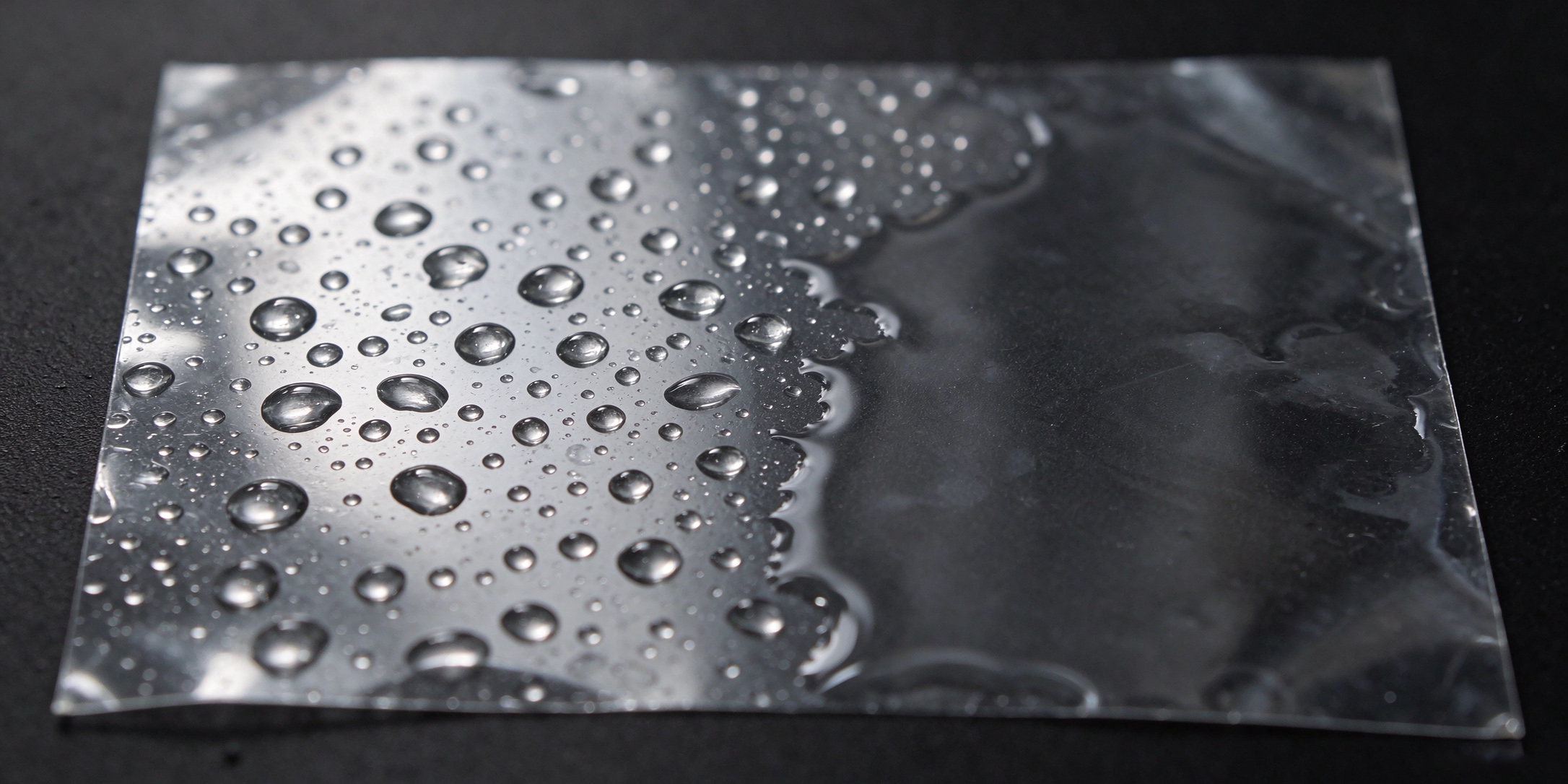
These coating concepts should be understood from two different perspectives: surface behavior and coating construction.
| Coating Concept | Main Description | What Buyers Should Understand |
|---|---|---|
| Hydrophobic | Water-repellent surface behavior | Water beading and surface wetting |
| Hydrophilic | Water-attracting surface behavior | Water spreading and sheeting |
| Embedded | Coating incorporated into a material structure | Coating position, integration, and manufacturing method |
Hydrophobic and hydrophilic describe how water interacts with a surface, while embedded coating describes a structural or manufacturing approach.
They are therefore not necessarily mutually exclusive technologies.
A manufacturer may use different coating structures to achieve specific surface characteristics.
6. How Do PPF Coatings Affect Daily Car Care?
The coating is only one part of the overall PPF system, but its surface characteristics can influence the vehicle owner's daily experience.
Water Behavior
Hydrophobic surfaces typically produce visible water droplets, while hydrophilic surfaces allow water to spread more evenly.
These different behaviors can affect how water moves across the vehicle after rain or washing.
Surface Cleaning
Water interaction can influence how easily water and some surface contaminants are rinsed away.
However, actual cleaning performance also depends on the type of contamination, washing method, and surface condition.
Long-Term Surface Performance
Coating performance may change with exposure to environmental conditions, washing chemicals, friction, and regular use.
Buyers should therefore evaluate not only the initial appearance but also the available durability information and testing conditions.
7. How Should Buyers Evaluate PPF Coating Technology?
For distributors, wholesalers, and automotive film brands, understanding the coating is useful when comparing products from different manufacturers.
Here are several practical questions to ask:
1. What Type of Coating Does the Product Use?
Confirm whether the product uses a hydrophobic, hydrophilic, or another coating configuration.
2. Is the Coating a Surface Layer or an Integrated Structure?
Ask the manufacturer to explain the coating's position and how it is incorporated into the film.
3. What Evidence Supports the Performance Claims?
Request relevant test information rather than relying only on marketing descriptions.
4. How Does the Surface Behave After Regular Use?
Where available, review durability test results and ask about the conditions under which the coating performance was evaluated.
5. Can You Evaluate a Physical Sample?
A sample allows buyers to inspect the actual surface appearance and observe water behavior under controlled conditions.
Comparing samples from different manufacturers can provide a more useful basis for purchasing decisions.
8. Understanding Coating Technology in AICI TPU Color PPF
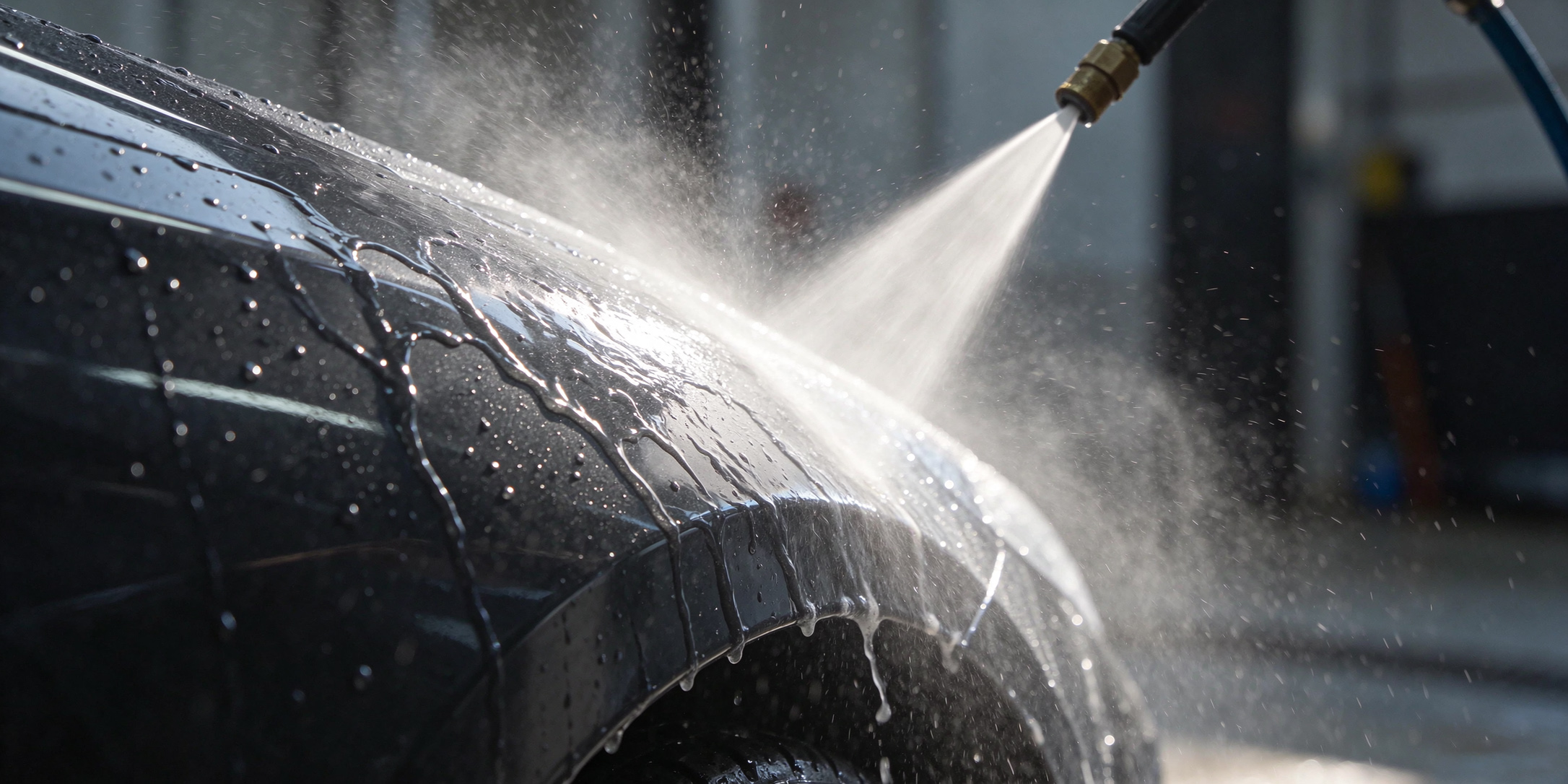
AICI is a Chinese automotive film manufacturer with 16 years of industry experience.
Our product range includes TPU Paint Protection Film, TPU Color PPF, and PVC Color Change Film.
As introduced in our previous article, AICI TPU Color PPF features a seven-layer construction, including a PET protective film, surface coating, transparent TPU layers, a nano ceramic color layer, an adhesive layer, and a PET release liner.
The surface coating is an important part of this construction.
Depending on the product configuration, different coating options may be available. Buyers interested in a specific coating type should confirm the relevant model and technical specifications with our team.
For distributors, installers, and automotive film brands, AICI supports product selection and OEM/ODM cooperation.
Free A5 samples are available for customers who want to check color and surface appearance before placing a bulk order. Customers only need to cover the international shipping cost.
Frequently Asked Questions
1. What is the difference between hydrophobic and hydrophilic PPF?
Hydrophobic PPF tends to make water form droplets, while hydrophilic PPF allows water to spread more evenly across the surface. They have different water interaction characteristics.
2. Is hydrophobic PPF always better than hydrophilic PPF?
No. Neither type is automatically superior in every situation. The appropriate coating depends on the intended product design, surface characteristics, and customer requirements.
3. What does embedded coating mean in PPF?
Embedded coating generally refers to a coating incorporated into a material structure. The exact construction and function depend on the manufacturer's technology and product design.
4. Can embedded coating also be hydrophobic?
Potentially, yes. Embedded describes a structural approach, while hydrophobic describes surface behavior. Whether a particular embedded coating has hydrophobic properties depends on its formulation.
5. How can buyers check PPF coating performance?
Buyers can request product specifications, relevant test information, and physical samples. Water behavior can be observed during sample evaluation, but a water test alone cannot establish overall coating quality or durability.
Conclusion
PPF coating technology is an important consideration when evaluating automotive paint protection film.
Hydrophobic coatings are associated with water beading, hydrophilic coatings with water spreading, and embedded coatings with how a coating is incorporated into the product structure.
Understanding these differences helps buyers ask more informed questions and compare products beyond their appearance and price.
If you are sourcing TPU PPF or TPU Color PPF for your business, contact AICI to discuss available product configurations, samples, and OEM/ODM cooperation.
Inside AICI TPU Color PPF: Understanding Its 7-Layer Structure