Glossy vs. Satin Color PPF: Key Differences
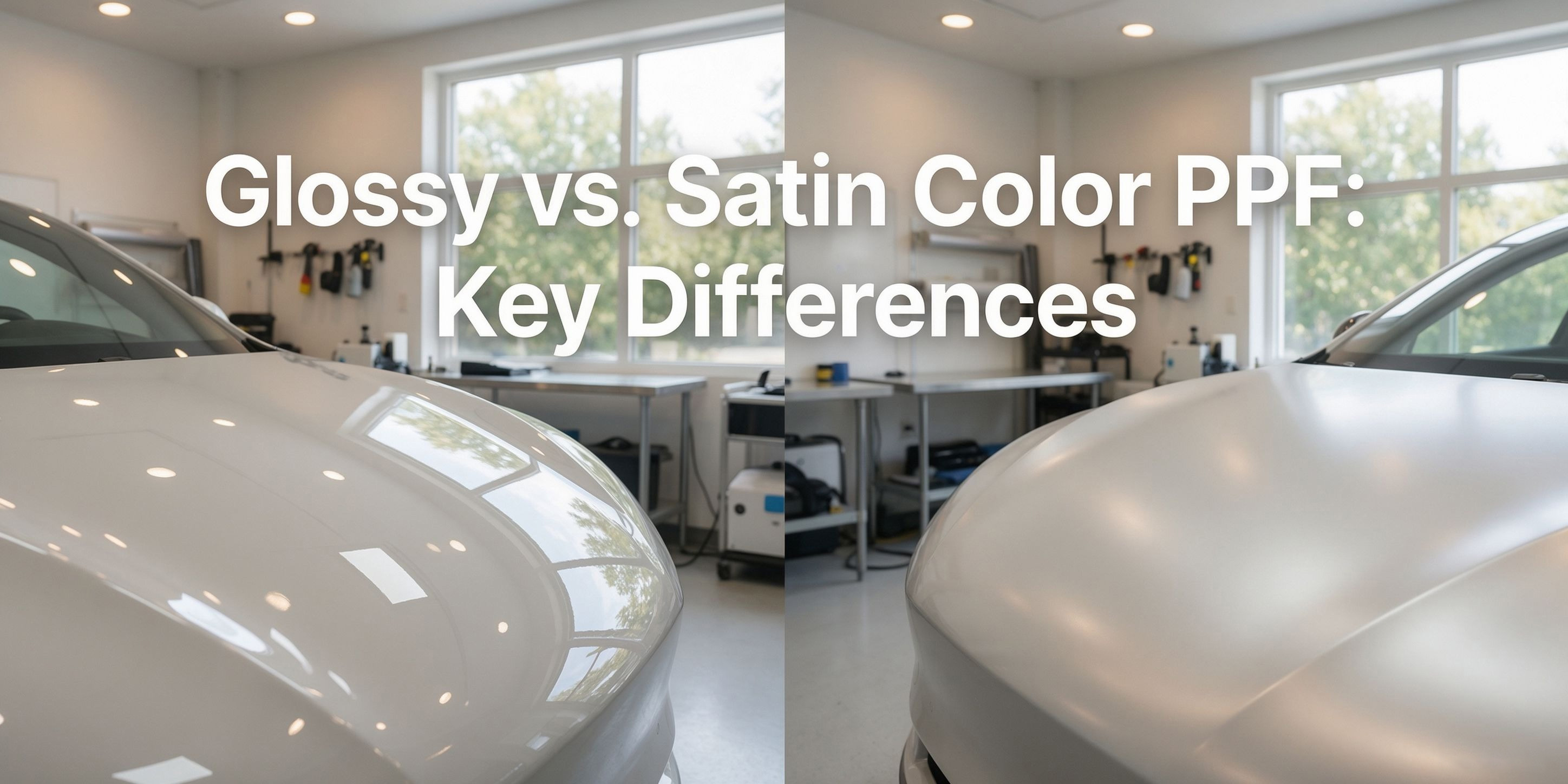
Glossy vs. Satin Color PPF: Key Differences
Choosing the right finish is an important part of selecting color paint protection film (PPF). Glossy and satin color PPF can offer two very different looks, even when the colors are similar.
The main difference between glossy and satin color PPF is how the surface reflects light. Glossy color PPF creates a shiny, reflective appearance, while satin color PPF produces a softer sheen with more restrained reflections. Both are designed to change a vehicle's appearance, and the level of paint protection depends on the specific film's construction and verified performance—not simply on whether the finish is glossy or satin.
For vehicle owners, installers, and automotive film distributors, understanding these differences makes it easier to select a finish that matches customer expectations, styling goals, and maintenance requirements.
1. What Is Glossy Color PPF?
Glossy color PPF is a colored paint protection film with a high-shine surface. It changes the vehicle's color or visual appearance while providing the protective function specified for that particular film.
Its reflective surface creates clear highlights under direct light and gives the vehicle a bright, polished look. Depending on the color and film design, a glossy finish can emphasize color depth, metallic effects, and the vehicle's original body lines.
Glossy color PPF may appeal to customers who prefer a traditional automotive paint appearance, a vibrant finish, or a more noticeable shine.
For distributors and installers, it can be a suitable option for customers who want a color transformation without giving up the familiar look of high-gloss automotive paint.
2. What Is Satin Color PPF?
Satin color PPF features a smooth, low-sheen surface that softens reflections rather than producing a mirror-like shine.
Its appearance sits between a high-gloss finish and a fully matte finish. Satin still has some visible sheen, but reflected light appears softer and less intense than on a glossy surface.
Depending on the color, the result can look understated, refined, or modern. Satin finishes may be particularly attractive to customers who want a distinctive appearance without the strong reflections associated with glossy films.
One important point: satin is not exactly the same as matte. Matte finishes generally have a flatter appearance with less visible sheen, while satin retains a subtle glow. The exact appearance depends on the manufacturer's finish design and the product itself.
3. Glossy vs. Satin Color PPF: Key Differences
The table below summarizes the main differences buyers should consider.
| Comparison Factor | Glossy Color PPF | Satin Color PPF |
|---|---|---|
| Surface appearance | Shiny, bright, and highly reflective | Smooth, subtle, and softly reflective |
| Visual effect | Emphasizes shine and clear highlights | Creates a more restrained, refined appearance |
| Color presentation | Can make colors look vivid and visually deep | Can give colors a softer, more understated character |
| Overall styling | Classic, polished, and eye-catching | Modern, understated, and distinctive |
| Light reflection | Produces stronger reflections | Diffuses or softens reflections |
| Maintenance | Care depends on the specific film and its instructions | Care depends on the specific film; preserving the surface texture is important |
| Paint protection | Depends on the film's construction and tested performance | Depends on the film's construction and tested performance |
| Best suited for | Customers who prefer a bright, glossy finish | Customers who prefer a subtle sheen and softer reflections |
These are general visual comparisons. Actual results vary with film color, surface design, lighting, the condition of the vehicle's paint, and installation quality.
Glossy and satin products within the same color PPF range may share some underlying material features, but buyers should not assume that every product has identical thickness, adhesive properties, topcoat technology, or protective performance. Always check the relevant technical data sheet.
4. Does Glossy or Satin Color PPF Provide Better Paint Protection?
Neither finish is automatically more protective simply because it is glossy or satin.
Color PPF is designed to provide a protective film layer over the vehicle's painted surface, but the level of protection depends on the individual product's design, material construction, thickness, adhesive system, topcoat, and test results.
For buyers comparing glossy and satin options, it is useful to separate two decisions:
-
Finish selection: Which surface appearance best matches the desired vehicle style?
-
Performance selection: Which product meets the required protection, durability, and maintenance expectations?
Before purchasing, review the manufacturer's technical documentation for relevant information, such as impact resistance, resistance to surface damage, self-healing capability, and other performance claims where applicable.
Do not assume that a glossy film always offers stronger protection, or that a satin film sacrifices protection for appearance. These conclusions require product-specific evidence.
For automotive film businesses, being able to explain this distinction helps customers make more informed decisions and reduces the risk of unrealistic expectations.
5. How Do Glossy and Satin Finishes Affect a Vehicle's Appearance?
The finish can change the way customers perceive the same color.
Glossy Color PPF: A Brighter, More Reflective Look
Glossy films produce stronger highlights when light hits the vehicle's surface. This can make the finish appear bright and polished, particularly on colors where reflections are clearly visible.
Customers may prefer glossy color PPF when they want:
-
A high-shine, polished appearance.
-
Stronger visual highlights along the vehicle's body lines.
-
A finish that resembles conventional glossy automotive paint.
-
A bold look for sports cars, luxury vehicles, or customized daily drivers.
The final result still depends on the chosen color, the quality of the film, and the condition of the underlying paint.
Satin Color PPF: A Softer, More Understated Look
Satin films reduce the sharpness of reflections and create a subtler visual effect. They can give a familiar color a different character without making the surface completely flat.
Customers may prefer satin color PPF when they want:
-
A restrained sheen rather than a mirror-like shine.
-
A modern and distinctive appearance.
-
A softer visual effect on body contours.
-
A finish that stands out through its surface character rather than strong reflections.
Neither finish is universally better. The right choice depends on the customer's taste, the vehicle's design, and the intended styling result.
6. What Should Buyers Know About Installation and Maintenance?
Both finishes require proper surface preparation, suitable installation techniques, and care that follows the manufacturer's instructions.
However, the difference in surface appearance can affect how installation or maintenance imperfections are perceived.
Installation Considerations
Before installation, the vehicle's paint should be assessed and the surface prepared according to the film manufacturer's requirements.
Installers should also check the film under appropriate lighting during application and final inspection. Reflections, surface texture, trapped particles, stretching marks, and panel edges can affect the finished appearance.
For satin color PPF in particular, maintaining a consistent finish across adjoining panels is important because differences in sheen can be noticeable under certain lighting conditions.
Professional installation is recommended when the application requires specialized skills or when the film manufacturer's instructions specify particular procedures.
Maintenance Considerations
The correct cleaning and maintenance process depends on the specific product.
General good practices include:
-
Follow the manufacturer's recommended cleaning products and washing methods.
-
Avoid abrasive cleaners or polishing compounds unless the manufacturer explicitly permits them.
-
Remove contaminants using the recommended procedure rather than aggressive rubbing.
-
Check the film's guidance before applying waxes, sealants, or other surface treatments.
-
Inspect the film periodically for lifting edges, damage, or other issues.
For satin finishes, pay particular attention to whether polishing or abrasive treatment is permitted. These processes can change the surface texture or create uneven glossy patches on some satin films.
For glossy finishes, avoid assuming that the surface can tolerate every polishing product or correction method. The film's own care instructions should determine the appropriate approach.
7. Which Finish Is Better for Your Customers or Business?
For installers and distributors, selecting a finish is not only a design decision. It is also a way to match the product range to the needs of different customers.
Choose Glossy Color PPF When:
-
Your customers prefer high-shine automotive finishes.
-
They want a bright, polished appearance.
-
Your market commonly requests glossy color customization.
-
You want to offer a familiar finish that many customers readily understand.
Choose Satin Color PPF When:
-
Your customers want a more subtle, low-sheen appearance.
-
They are looking for a distinctive styling option.
-
Your market includes customers interested in modern or understated vehicle finishes.
-
You can explain how satin surfaces should be installed and maintained.
Should a Distributor Offer Both?
For many automotive film businesses, offering both finishes can help address different customer preferences.
A customer seeking a bright, reflective finish may prefer glossy color PPF, while another may choose satin for its more restrained appearance. Providing clear comparisons and real samples can help customers make a decision with greater confidence.
Before building inventory, distributors should consider local demand, available colors, minimum order quantities, supplier support, and the technical documentation available for each product.
It is also useful to maintain consistent color and finish references for repeat orders. A physical sample is often more helpful than relying on a screen image alone.
8. What Should You Check Before Purchasing Color PPF?
Before selecting glossy or satin color PPF for resale or installation, confirm the following details with your supplier:
-
Available colors and finishes: Request the current color chart and confirm which shades are available in glossy and satin options.
-
Product construction: Verify the film's material, layer structure, adhesive system, and stated thickness.
-
Protection performance: Review supporting test results and technical documentation for the claims that matter to your customers.
-
Self-healing capabilities: Confirm whether the specific product has this feature and follow its operating and care requirements.
-
Installation instructions: Check the recommended application method, surface preparation, and any finish-specific precautions.
-
Maintenance requirements: Ask which cleaning products and maintenance procedures are permitted.
-
Warranty terms: Review the actual coverage, exclusions, and conditions rather than relying on general marketing statements.
-
Commercial conditions: Confirm minimum order quantity, pricing, lead time, packaging, and shipping arrangements.
These checks help distributors and installers evaluate a film based on product evidence instead of appearance alone.
9. Frequently Asked Questions
What is the main difference between glossy and satin color PPF?
Glossy color PPF has a shiny, reflective surface, while satin color PPF has a softer sheen with less intense reflections. The primary difference is appearance; protection depends on the specifications and performance of the individual film.
Is satin color PPF the same as matte color PPF?
No. Satin generally retains a subtle sheen, while matte finishes appear flatter and less reflective. The exact appearance varies with the manufacturer's product design.
Does glossy color PPF protect paint better than satin color PPF?
Not necessarily. A finish alone does not establish protective performance. Buyers should compare the technical data sheets and verified test results for the specific products.
Is satin color PPF harder to maintain?
Maintenance requirements depend on the product. Some satin films can be affected by abrasive polishing or treatments that alter their surface texture. Follow the specific manufacturer's maintenance instructions.
Can I choose the same color in both glossy and satin finishes?
That depends on the manufacturer's available product range. Confirm the current color chart and availability with the supplier. Even when color names are similar, samples should be checked under consistent lighting before a large order.
Which color PPF finish should a distributor stock?
The decision depends on customer demand, popular local styling preferences, available colors, commercial terms, and supplier support. Offering both finishes may be useful when the market includes customers with different styling preferences.
Conclusion: Choose the Finish That Matches the Intended Look
Glossy and satin color PPF offer different ways to customize a vehicle's appearance. Glossy film emphasizes shine and clear reflections, while satin film delivers a softer sheen and a more understated visual effect.
Neither finish is automatically superior in protection. Buyers should select the appearance they want, then verify that the individual product meets their technical and maintenance requirements.
For automotive film distributors, wholesalers, and installers, understanding the difference makes it easier to explain options to customers, recommend suitable products, and build a product portfolio that fits the local market.
Looking for color PPF options for your business? Contact AICI to discuss your target market and explore available colors and finishes. Confirm current product availability, specifications, and commercial terms with the AICI team before placing an order.
Preventing PPF Edge Lift: A Practical Guide for Installers
TPU Color PPF or PVC Wrap? A Product Guide for Automotive Film Shops