Private Label PPF Manufacturer: How to Start Your Own Paint Protection Film Brand
The global automotive aftermarket continues to create opportunities for businesses offering paint protection and vehicle customization services. For automotive film distributors, importers, wholesalers, and professional installers, launching a private label Paint Protection Film (PPF) brand can be an effective way to develop a distinct market position and build long-term customer relationships.
However, starting a PPF brand involves more than putting your logo on a film roll. Buyers need to select suitable products, identify a reliable manufacturing partner, evaluate product samples, understand customization requirements, and establish clear quality and supply arrangements.
Working with an experienced private label PPF manufacturer can help businesses organize these steps more efficiently. From product selection to customized packaging, every decision should be based on the target market, business model, and actual purchasing requirements.
In this guide, we explain how private label PPF works, the differences between OEM and ODM manufacturing, and seven essential steps to consider before launching your own paint protection film brand.
1. What Is Private Label PPF?
Private Label PPF refers to paint protection film manufactured by a supplier and sold under another company's brand name. Instead of developing an entire production facility, businesses can work with an established manufacturer to source film products and develop their own branded product lines.
Depending on the manufacturer's capabilities and agreed cooperation terms, private label services may include:
-
Branding and Logo Customization: Applying the buyer's brand identity to approved product labels, packaging, or other agreed materials.
-
Customized Packaging: Developing branded boxes, labels, sleeves, and other packaging materials according to approved designs and order requirements.
-
Product Selection: Choosing from available product categories, finishes, colors, and specifications to match the target market.
-
Product Development: Discussing customized colors or product requirements with the manufacturer when the project meets its technical and minimum order requirements.
For example, an automotive film distributor may choose to launch a branded product range that includes clear TPU Paint Protection Film, colored TPU PPF, or other automotive films, depending on its target customers and market demand.
The exact scope of customization varies between manufacturers. Buyers should confirm available services, minimum order quantities (MOQs), setup costs, sample approval procedures, and production conditions before placing an order.
In short, private label PPF allows businesses to build their own brand identity while working with a manufacturing partner for product supply and agreed customization services.
2. OEM vs. ODM PPF: What's the Difference?
When looking for an OEM PPF manufacturer, buyers may also encounter the term ODM. Although both business models involve cooperation with manufacturers, they are not exactly the same.
| Comparison | OEM | ODM |
|---|---|---|
| Basic concept | Manufacturing according to the buyer's agreed requirements | Providing existing or developed product solutions for the buyer's brand |
| Product selection | Based on agreed product specifications | Often based on the manufacturer's existing product range |
| Branding | Can include the buyer's brand identity | Can include the buyer's brand identity |
| Customization | Depends on the manufacturer's capabilities and agreement | Depends on available development and customization services |
| Suitable for | Businesses with defined product requirements | Businesses looking for product solutions and brand development support |
OEM (Original Equipment Manufacturing) generally refers to manufacturing products according to specifications or requirements agreed upon with the buyer.
ODM (Original Design Manufacturing) generally involves a manufacturer providing product designs or existing product solutions that can be offered under the buyer's brand, subject to the cooperation agreement.
For example, a distributor may select an existing TPU PPF model and request customized packaging under its own brand. This is a common private label arrangement.
Another business may have specific requirements for film appearance, color, or product specifications and discuss product development with the manufacturer.
Neither model is automatically better. The right choice depends on your product knowledge, budget, target customers, and the manufacturer's actual capabilities.
Before signing an agreement, clarify product ownership, customization scope, design approval, intellectual property rights, and responsibilities for product quality.
3. Why Start Your Own PPF Brand?
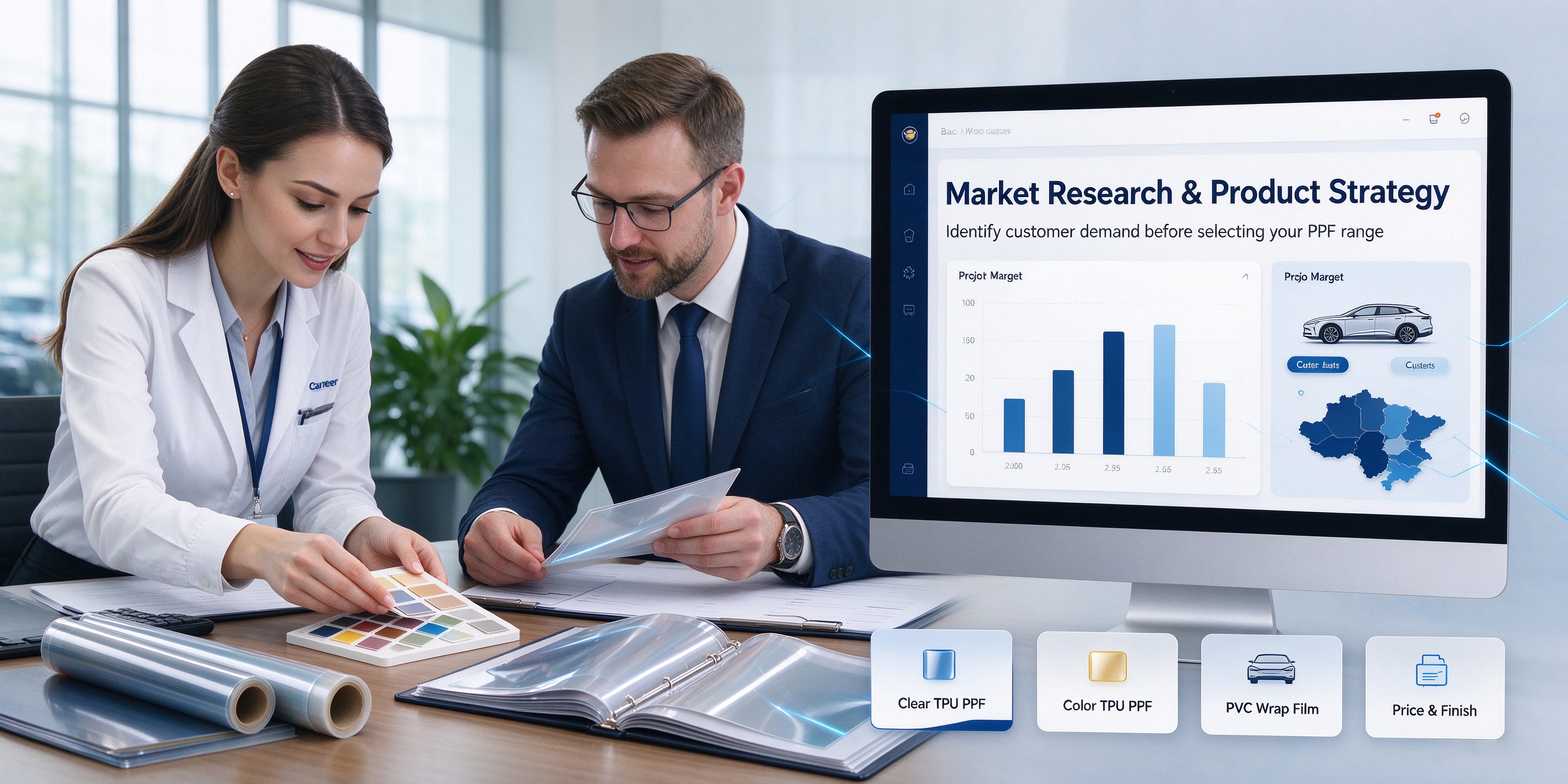
For automotive film distributors, importers, and established installation businesses, developing a private label PPF brand can offer several business advantages.
3.1 Build a Distinct Brand Identity
Selling products under your own brand gives your business more control over how it presents its product range to customers.
Customized packaging, product labels, and consistent brand presentation can help create a recognizable identity in your local market.
Instead of selling interchangeable products under multiple supplier names, you can gradually establish a consistent brand image.
3.2 Develop Your Own Product Portfolio
Different markets have different preferences for paint protection films. Some customers focus on transparent PPF, while others are interested in colored PPF and customized vehicle styling.
Working with a manufacturer allows businesses to select suitable products and gradually develop a product portfolio based on actual market demand.
For example, a distributor may begin with clear TPU PPF before introducing selected colored PPF products as the business grows.
3.3 Build Long-Term Customer Relationships
A recognizable private label brand can help distributors and installation businesses develop stronger relationships with their dealers, installers, and end customers.
Instead of competing only on the basis of individual product prices, businesses can focus on product selection, service quality, technical support, and consistent supply.
3.4 Create Opportunities for Business Expansion
Once a branded product line has established demand, businesses may explore additional colors, finishes, product categories, and packaging options.
This creates opportunities to expand the product range according to customer feedback and market development.
However, launching a private label brand also requires investment in samples, initial inventory, branding, marketing, and customer support. Businesses should evaluate their market demand and purchasing capacity before committing to large orders.
A practical starting point is to identify a focused product range, test samples, and confirm the manufacturer's customization and supply conditions before launching.
4. How to Start Your Own PPF Brand: 7 Essential Steps
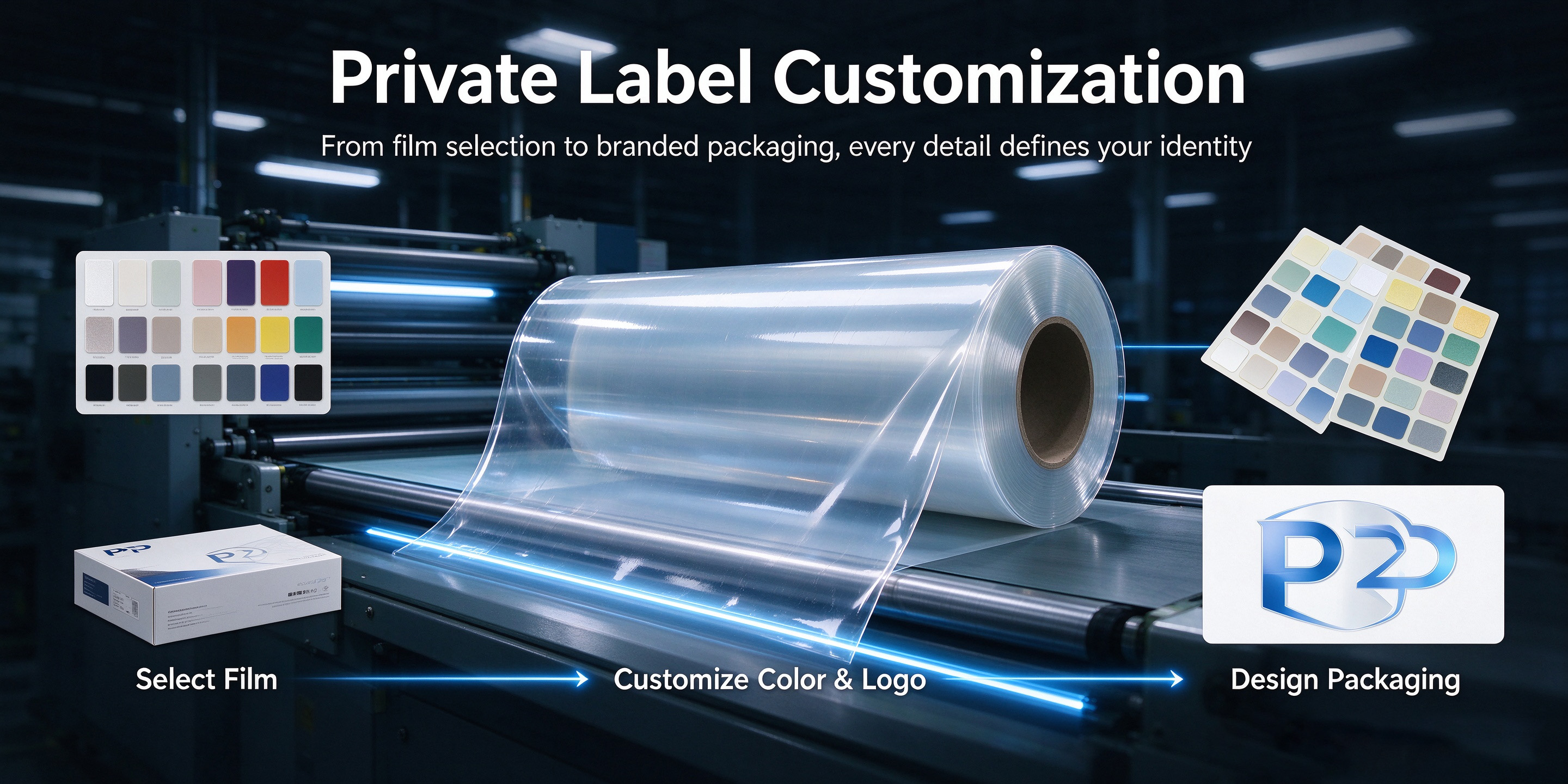
Launching a paint protection film brand requires a structured approach. The following seven steps can help distributors, importers, and automotive businesses prepare for cooperation with a manufacturing partner.
Step 1: Research Your Target Market
Before contacting manufacturers, understand who your potential customers are and what products they need.
Start by researching:
-
Which PPF products are popular in your target market?
-
Do local installers mainly use clear PPF or colored PPF?
-
What price range do customers expect?
-
Which product finishes are in demand, such as glossy, matte, or satin?
-
Which brands are already established in your market?
-
Are your target customers professional installers, distributors, car dealerships, or end users?
For example, a distributor serving professional detailing studios may prioritize transparent PPF with suitable installation characteristics and reliable after-sales support.
A business targeting vehicle customization shops may also consider colored TPU PPF and different finishes.
Market research helps prevent unnecessary inventory investment and makes it easier to select products that match real customer demand.
Step 2: Choose the Right PPF Products
Not all paint protection films serve exactly the same purpose. Before developing your brand, decide which product categories fit your business strategy.
Common options include:
Clear TPU Paint Protection Film
Clear TPU PPF is designed to protect a vehicle's original paintwork while maintaining its appearance. It is commonly used by professional installers and automotive detailing businesses.
When evaluating clear PPF, buyers should consider film construction, thickness, surface coating, adhesive characteristics, installation performance, appearance, and available technical documentation.
TPU Color PPF
TPU Color PPF combines paint protection and vehicle appearance customization. It allows customers to change the vehicle's color while adding a protective film layer.
Buyers should evaluate color consistency, surface finish, visual appearance, installation handling, and product suitability for their target market.
PVC Color Change Film
PVC Color Change Film is another option for businesses involved in vehicle wrapping and appearance customization.
It serves a different product category from TPU Paint Protection Film. Buyers should understand the differences in material, intended application, and product performance before deciding how to position each product in their portfolio.
A good strategy is to begin with a manageable selection of products rather than launching too many models at once.
Step 3: Find a Reliable PPF Manufacturer
Choosing the right manufacturing partner is one of the most important decisions when building a private label brand.
A supplier should be evaluated based on more than its quotation or product photos.
Consider the following factors:
1. Manufacturing Experience
Review the manufacturer's experience in the automotive film industry, product range, business history, and ability to support overseas customers.
2. Product Information
Ask for product specifications, technical data sheets (TDS), available test reports, installation instructions, and model-specific warranty information.
3. Quality Control
Understand how incoming materials, production processes, finished products, and batch consistency are managed.
4. Customization Capabilities
Confirm whether the manufacturer can support your required logo, packaging, product selection, or customized colors.
5. Supply and Communication
Discuss minimum order quantities, production arrangements, delivery terms, payment conditions, and communication procedures.
6. Sample Availability
A reliable supplier should be willing to discuss sample evaluation before a large purchasing commitment.
Do not select a manufacturer based solely on the lowest quotation. Product suitability, quality consistency, documentation, and long-term cooperation conditions are equally important.
Step 4: Request and Evaluate Product Samples
Before placing a bulk order, request samples of the specific products you intend to sell.
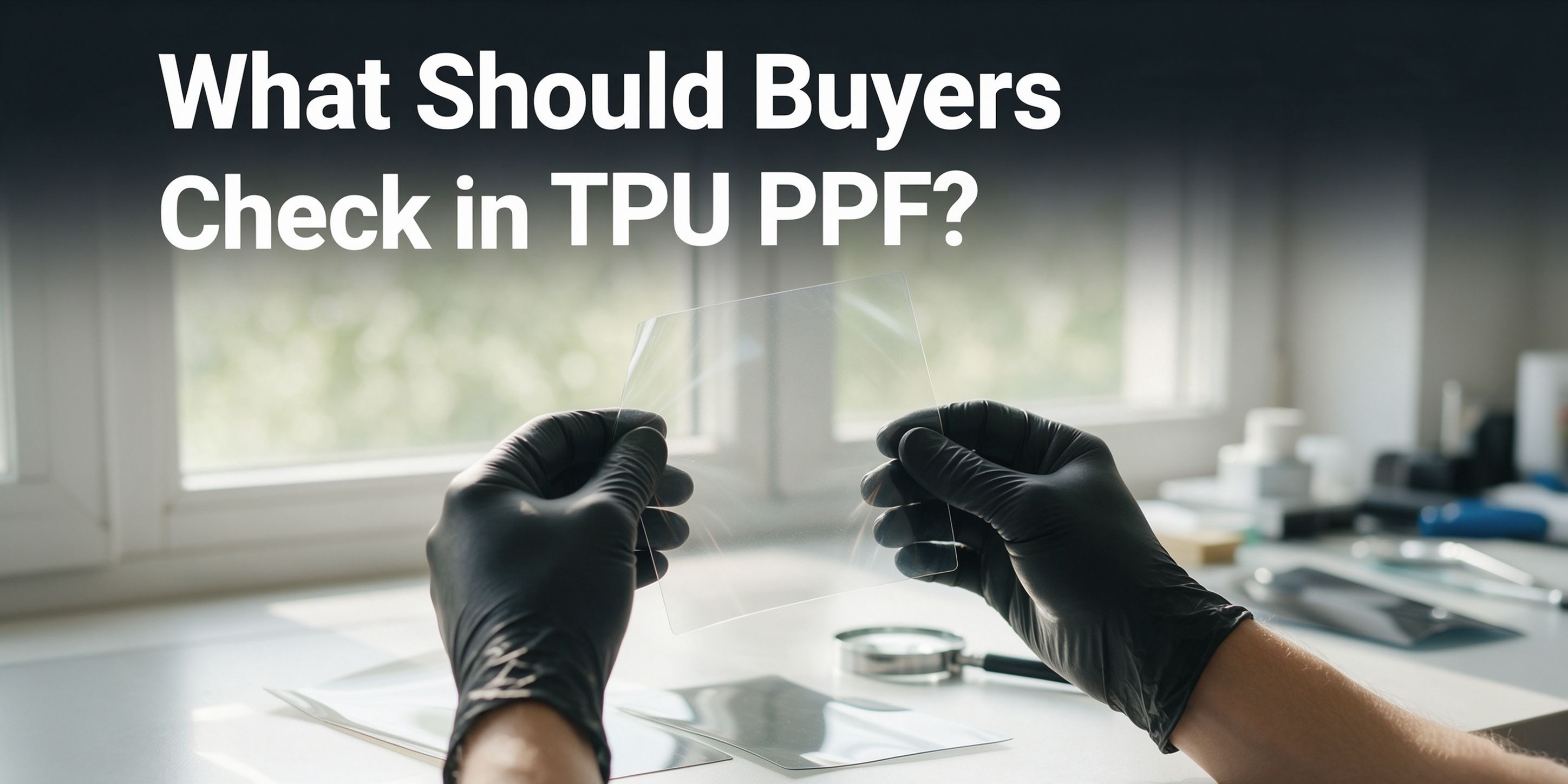
Sample evaluation helps buyers understand whether the product matches their expectations and target market.
A practical evaluation process includes:
-
Confirm the product model and specifications.
-
Check the film's surface appearance and color consistency.
-
Examine the film's flexibility and handling characteristics.
-
Arrange installation tests with professional installers.
-
Evaluate conformability on suitable test panels.
-
Check edge finishing and application behavior.
-
Compare the sample with the supplier's technical documentation.
-
Record any questions or concerns before confirming the order.
For colored PPF, pay particular attention to color appearance, finish, and consistency under different lighting conditions.
For clear PPF, focus on transparency, surface quality, installation behavior, and the performance characteristics relevant to your application.
One important point: a sample evaluation should also establish whether the tested sample represents the product that will be supplied in bulk production.
Buyers should request confirmation of the model number, production specifications, and applicable quality inspection procedures.
Testing samples before bulk purchasing helps reduce uncertainty and supports more informed purchasing decisions.
Step 5: Customize Your Brand and Packaging
Once you have selected the products, the next step is to develop your brand presentation.
Private label customization may involve several elements.
Logo and Brand Identity
Prepare your brand name, logo files, preferred colors, and design guidelines.
Discuss where the logo can be applied and which materials are available for customization.
Packaging Design
Packaging is an important part of product presentation, especially for distributors and businesses selling through dealer networks.
Common packaging customization options may include:
-
Product boxes
-
Outer cartons
-
Packaging sleeves
-
Product labels
-
Sealing stickers
-
Branded packaging materials
Some manufacturers can help source customized packaging materials, while others may allow buyers to provide their own finished packaging.
Confirm design specifications, printing requirements, material costs, and production arrangements before approval.
Customized Colors
Some businesses may want to develop exclusive colors to differentiate their product range.
This usually requires additional color development, sample confirmation, and a higher minimum order quantity.
The final color should be approved before mass production to reduce misunderstandings regarding appearance and expectations.
Confirm the Final Design
Before production, make sure all approved artwork, logo positions, product labels, packaging details, and specifications are documented.
Never rely only on informal discussions when confirming customized production requirements.
Step 6: Confirm MOQ, Pricing, and Order Terms
Before placing an order, make sure you understand the commercial requirements of your private label project.
Important details include:
| Item | What Buyers Should Confirm |
|---|---|
| MOQ | Minimum order quantity for each product or customization project |
| Product Price | Unit price or price per roll |
| Customization Cost | Logo, packaging, design, or development charges |
| Sample Cost | Sample availability and shipping arrangements |
| Payment Terms | Deposit, balance payment, and payment method |
| Production Time | Estimated production schedule |
| Packaging | Standard or customized packaging |
| Shipping | Available delivery methods and trade terms |
| Warranty | Written warranty conditions for each product model |
MOQ is particularly important for new brands.
A standard product may have different purchasing requirements from a customized product. Logo development, customized colors, and packaging may each involve separate minimum quantities.
For this reason, buyers should request a detailed quotation rather than assuming that all customization options share the same MOQ.
Also, compare the total landed cost rather than looking only at the film price.
International shipping, customs duties, taxes, packaging, and other import-related expenses can influence the final purchasing cost.
Step 7: Confirm Quality Control Before Bulk Production
Before approving mass production, establish clear expectations with your manufacturing partner.
This is particularly important when products will be sold under your own brand.
Consider confirming:
-
Approved product models and specifications.
-
Final sample approval records.
-
Packaging and branding artwork.
-
Product labeling and roll identification.
-
Inspection requirements.
-
Batch consistency expectations.
-
Packaging and shipping arrangements.
-
Written warranty terms and claim procedures.
For technical performance claims, request supporting documentation for the exact product model.
For example, if a product is marketed as self-healing, UV-resistant, or stain-resistant, confirm that the relevant product model has the corresponding features and supporting evidence.
Avoid making performance promises to your own customers based only on general descriptions of a product series.
A clear quality agreement helps both parties understand their responsibilities and reduces the possibility of disputes after delivery.
5. What Should You Ask a Private Label PPF Manufacturer?
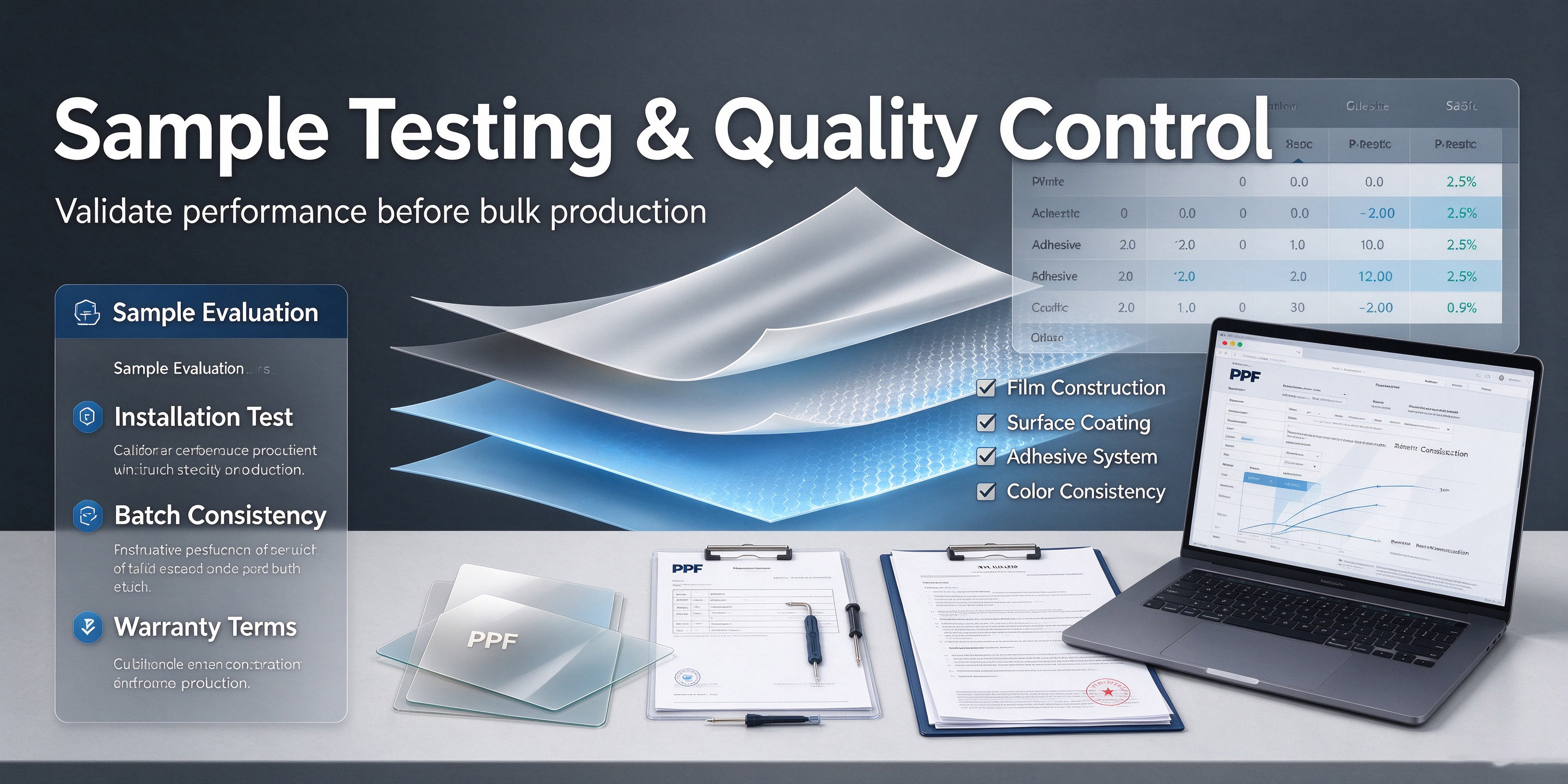
Before choosing an OEM PPF manufacturer, prepare a list of questions to compare potential suppliers fairly.
The following checklist can help you organize your discussions.
| Question | Why It Matters |
|---|---|
| What types of PPF do you manufacture or supply? | Understand the available product range. |
| Can I sell the products under my own brand? | Confirm private label availability. |
| What logo and packaging options are available? | Understand customization possibilities. |
| What is the MOQ for standard products? | Plan the initial purchasing quantity. |
| Is customized color development available? | Evaluate product differentiation opportunities. |
| Can I receive samples before ordering? | Test products before bulk purchasing. |
| Can you provide TDS and available test reports? | Verify product information. |
| What QC procedures are used? | Understand quality management. |
| What are the production and delivery arrangements? | Plan inventory and distribution. |
| What warranty applies to each product model? | Understand after-sales responsibilities. |
A professional supplier should be able to explain which services are available, which requirements need further confirmation, and what conditions apply to each project.
Buyers should also keep written records of quotations, specifications, approved samples, customization artwork, and order agreements.
This makes future repeat orders easier to manage.
6. Common Mistakes When Starting a PPF Brand
Launching a new automotive film brand can be challenging. Avoiding common purchasing mistakes can help reduce unnecessary costs and operational problems.
Mistake 1: Choosing a Supplier Based Only on Price
The lowest quotation does not always represent the best purchasing decision.
Differences in product specifications, adhesive systems, surface coatings, quality control, and warranty conditions can affect the overall value of a product.
Compare suppliers using consistent product requirements rather than comparing prices without understanding what is included.
Mistake 2: Ordering Too Many Products at the Beginning
Launching too many models can increase inventory pressure and make it difficult to understand which products customers actually prefer.
Start with a focused product range and expand based on sales feedback and market demand.
Mistake 3: Skipping Sample Testing
Product photos and technical descriptions cannot fully demonstrate installation performance.
Always arrange appropriate sample evaluations before committing to significant purchasing quantities.
Mistake 4: Ignoring Customization Requirements
Logo printing, packaging, customized colors, and other branding options may have different setup costs and MOQs.
Confirm these requirements early instead of waiting until the production stage.
Mistake 5: Making Unverified Performance Claims
A private label brand is responsible for how it presents its products to customers.
Do not advertise features such as self-healing, stain resistance, or long-term durability unless the relevant product information and supporting evidence are available.
Make sure warranty periods and coverage are confirmed for each product model.
Mistake 6: Ignoring After-Sales Responsibilities
When building a brand, you are not only selling film products. You are also developing customer expectations.
Understand the supplier's warranty conditions, claim procedures, technical support arrangements, and responsibilities before launching your products.
A well-planned after-sales process helps protect your brand reputation.
7. How AICI Supports Automotive Film Brand Development
Choosing the right manufacturing partner is an important part of building a successful private label PPF business.
Guangdong Aici New Materials Co., Ltd. (AICI) specializes in automotive film products, including TPU Paint Protection Film, TPU Color PPF, and PVC Color Change Film.
With 16 years of industry experience, AICI focuses on product manufacturing, quality control, and supporting overseas automotive film partners.
For businesses exploring private label cooperation, AICI can discuss product selection and available customization options according to specific project requirements.
Potential cooperation options include:
Product Selection
Buyers can discuss suitable products from the available clear TPU PPF, TPU Color PPF, and PVC Color Change Film ranges.
Customized Color Development
For qualifying projects, customized color development can be discussed based on customer-provided color samples and factory evaluation.
Color development involves sample approval and specific minimum order requirements.
Logo and Packaging Customization
Available customization options may include backing paper logos, packaging sleeves, labels, sealing stickers, and customized cartons, subject to the applicable order quantities and production arrangements.
Sample Evaluation
Buyers can discuss product samples before making a bulk purchasing decision.
A5 samples are available free of charge for initial checks of color, surface appearance, and feel. International shipping costs are paid by the customer.
International Supply Support
AICI can discuss suitable shipping arrangements and trade terms according to the destination and order requirements.
Every private label project is different. Product selection, customization costs, MOQs, production schedules, and final specifications should be confirmed individually before an order is placed.
Whether you are an automotive film distributor, importer, wholesaler, or business planning to launch your own PPF brand, starting with a clear product plan and sample evaluation is a practical way to move forward.
8. Frequently Asked Questions About Private Label PPF
Q1: What is the minimum order quantity for private label PPF?
The MOQ depends on the product and customization requirements. Standard products, customized colors, backing paper logos, and packaging may have different minimum quantities.
Ask the manufacturer for a project-specific quotation before confirming your purchasing plan.
Q2: Can I start a PPF brand without owning a factory?
Yes. A business can develop its own PPF brand by cooperating with an established manufacturer that offers suitable product supply and private label services.
The brand owner focuses on market development, product positioning, sales, and customer relationships, while the manufacturing partner handles the agreed manufacturing and customization work.
Q3: What is the difference between OEM and private label PPF?
Private label PPF generally refers to selling products under your own brand name. OEM refers to a manufacturing arrangement based on agreed product requirements.
A private label project may use OEM manufacturing services, but the exact relationship depends on the cooperation agreement.
Q4: Can I customize the color and packaging of my PPF products?
Customization may be available depending on the manufacturer's capabilities and order requirements.
Buyers should confirm color development procedures, sample approval, packaging options, artwork requirements, costs, and minimum order quantities before production.
Q5: Should I test PPF samples before placing a bulk order?
Yes. Sample testing helps verify product appearance, handling, installation behavior, and suitability for your target market.
It is also important to confirm that the approved sample corresponds to the product specifications and quality requirements agreed upon for bulk production.
Conclusion: Choose the Right PPF Manufacturing Partner
Building your own paint protection film brand requires more than selecting a product and adding a logo. It involves market research, product selection, supplier evaluation, sample testing, customization planning, and quality management.
For distributors, importers, wholesalers, and professional installers, working with a suitable manufacturing partner can make the process more organized and manageable.
Before launching your brand, define your target market, identify the products your customers need, evaluate samples, and confirm all commercial and customization requirements in writing.
At Guangdong Aici New Materials Co., Ltd. (AICI), we work with overseas automotive film partners to discuss suitable TPU Paint Protection Film, TPU Color PPF, and PVC Color Change Film solutions.
Planning to launch your own PPF brand?
Contact AICI to discuss your product requirements, available customization options, sample arrangements, and potential OEM or private label cooperation.
Share your target market, preferred products, and estimated order quantity with our team so we can better understand your project.
TPU Color PPF or PVC Wrap? A Product Guide for Automotive Film Shops
How OEM and Private-Label Automotive Film Manufacturing Works