How to Evaluate PPF Samples Before Placing a Bulk Order

Choosing a paint protection film supplier is an important decision for distributors, importers, and professional installers. Product photos and technical specifications can provide useful information, but they cannot show everything about how a film looks, feels, and performs during installation.
That is why evaluating PPF samples before placing a bulk order is an important step in the purchasing process.
A sample allows buyers to make an initial assessment of the film's appearance, surface finish, color, and handling characteristics. With a suitable testing process, buyers can also identify questions that should be clarified with the supplier before committing to a larger order.
However, not all samples provide the same level of information. A small sample is useful for an initial inspection, while a proper installation trial may require a larger piece of film.
This guide explains what buyers should check and how to turn sample evaluation into a more reliable purchasing decision.
1. Define Your Requirements Before Evaluating Samples
Before comparing samples from different suppliers, decide what your business actually needs.
A distributor may prioritize product consistency, packaging, and long-term supply. A professional installer may pay more attention to film handling, adhesion, and installation behavior. A private-label brand may also need to consider product specifications, branding, and packaging options.
Start by clarifying the following points:
-
Product type: Are you looking for clear TPU PPF, colored PPF, or another type of automotive film?
-
Target customers: Will the product be sold to professional installers, detailing shops, distributors, or end users?
-
Appearance: Do you need a glossy, matte, satin, or special-effect finish?
-
Product requirements: Which specifications and performance characteristics are essential for your market?
-
Commercial requirements: What are your expected order quantity, packaging needs, and target price range?
Having clear requirements makes it easier to compare products fairly instead of choosing a sample based only on its first impression.
2. Inspect the Appearance and Surface Quality

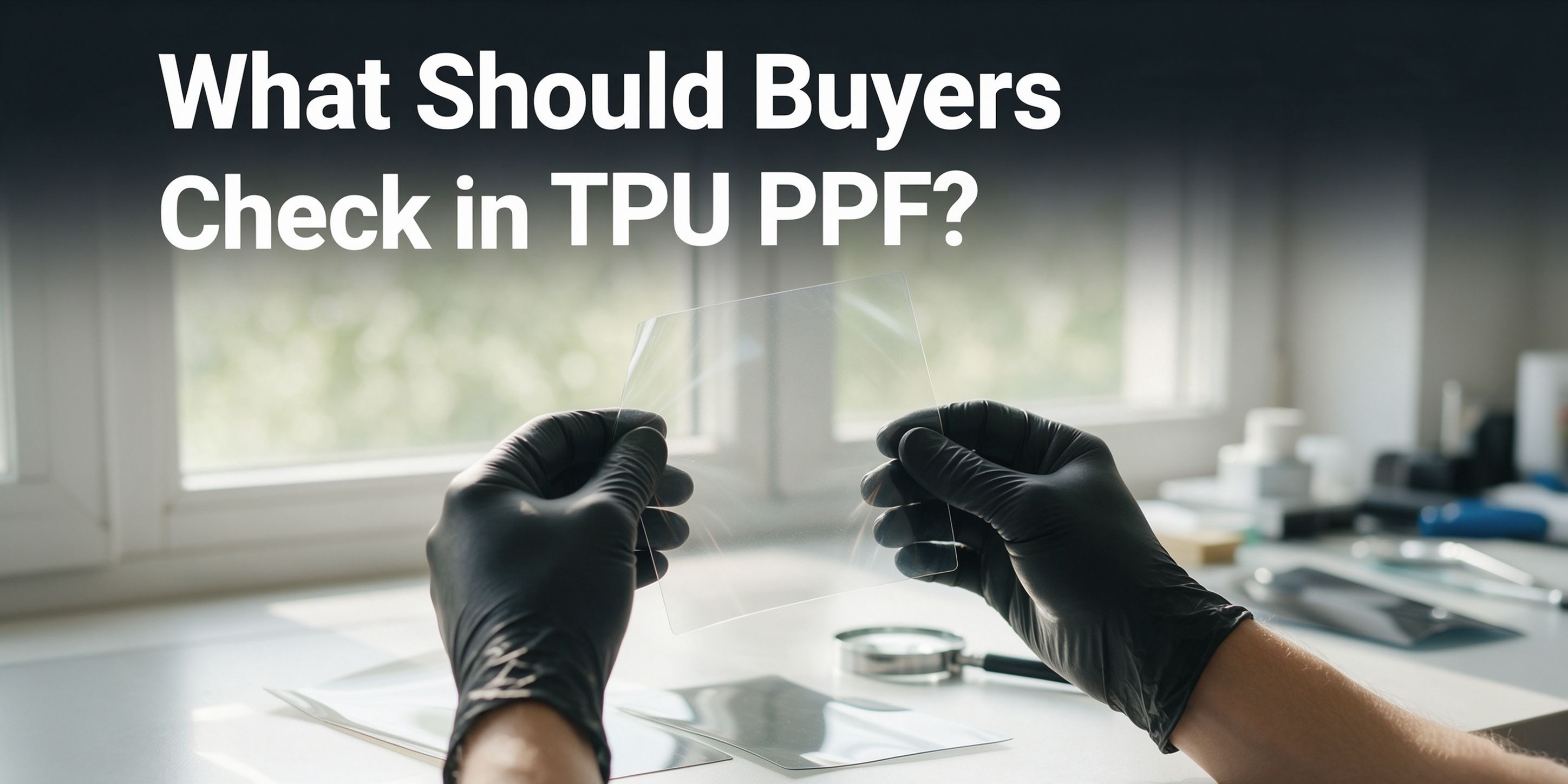
The first step after receiving a PPF sample is a visual inspection.
Check the film under suitable lighting and look for visible defects or inconsistencies. For clear PPF, pay particular attention to transparency and surface appearance. For colored PPF, examine the color and finish.
Here are several details worth checking:
Color and Finish
For colored PPF, compare the sample with the color reference provided by the supplier. Check whether the appearance matches your expectations under different lighting conditions.
For clear PPF, pay attention to clarity, haze, and the overall visual appearance of the surface.
Surface Smoothness
Look for obvious scratches, contamination, uneven texture, or other visible surface defects.
A clean and consistent surface is important for the final appearance of the installed film.
Gloss Level and Texture
If you are comparing glossy, matte, or satin products, make sure the finish matches the intended product description.
Do not rely only on photographs. Viewing the physical sample under consistent lighting can provide a more useful comparison.
Protective Liner and Sample Condition
Check whether the sample arrived in suitable condition. Look for visible contamination, damage, or handling marks that could affect your assessment.
If something appears unusual, take photographs and ask the supplier whether it is related to sample handling, storage, or the product itself.
3. Review the Product Specifications

Appearance is only one part of sample evaluation. Buyers should also confirm that the product specifications match their purchasing requirements.
Ask the supplier for product-specific technical information, such as:
-
Film material and construction
-
Nominal film thickness and the measurement method
-
Available roll width and length
-
Surface coating information, where applicable
-
Adhesive type and relevant characteristics
-
Release liner type
-
Recommended application method
-
Installation and storage instructions
-
Available warranty terms, if applicable
For example, TPU PPF and PVC color change film are different product categories. Buyers should confirm that the material supplied matches the product they intend to purchase.
It is also important to check whether the specifications refer to the complete film construction or to an individual layer. Different measurement methods can produce figures that are not directly comparable.
Do not assume that a sample has the same specifications as another product from the same supplier. Confirm the exact model and technical information before making a purchasing decision.
4. Evaluate Installation Performance
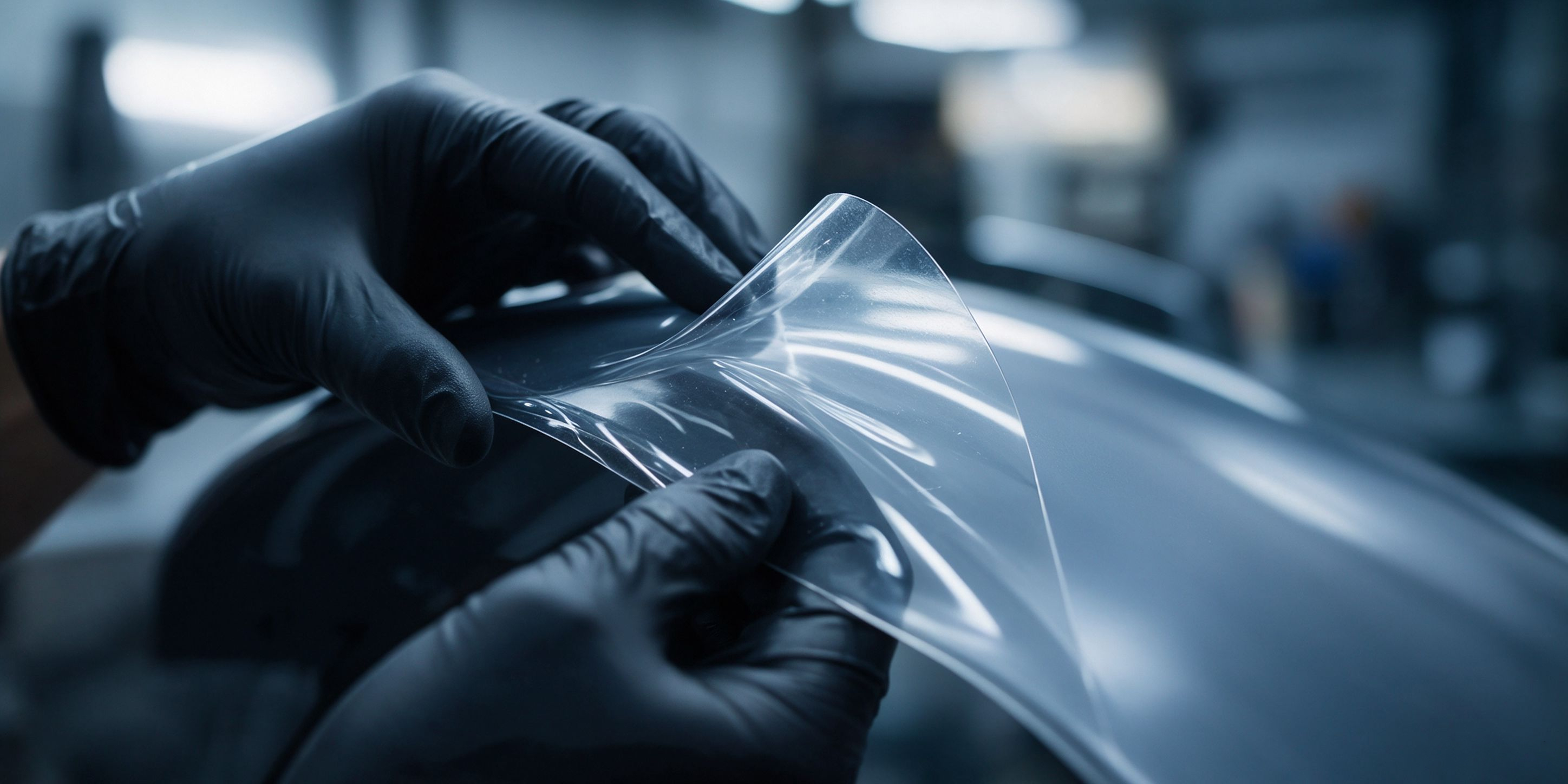
A sample may look attractive on a desk but behave differently during actual installation.
For professional installers and distributors who serve installation businesses, an installation trial is an important part of product evaluation.
A larger sample or test piece is generally more suitable for this purpose than a small A5 sample.
Depending on the product and the supplier's instructions, consider evaluating the following:
Handling and Positioning
Observe how the film behaves when it is positioned on a suitable test surface.
Check whether installers can handle and position it comfortably using the recommended application method.
Stretching and Conformability
For applications involving curved panels, evaluate how the film responds to stretching and positioning.
Avoid making conclusions based on excessive stretching or techniques outside the manufacturer's recommended installation procedure.
Adhesion and Edge Finishing
Observe how the film adheres during installation and how the edges behave after finishing.
If the product requires post-heating or another specific installation step, follow the supplier's instructions rather than applying a general temperature or procedure to every film.
Final Appearance
After installation, inspect the film for visible defects, uneven surfaces, trapped contamination, or other problems.
For a more reliable comparison, use the same installer, test surface, and installation conditions when evaluating products from different suppliers.
5. Compare Samples Under Consistent Conditions
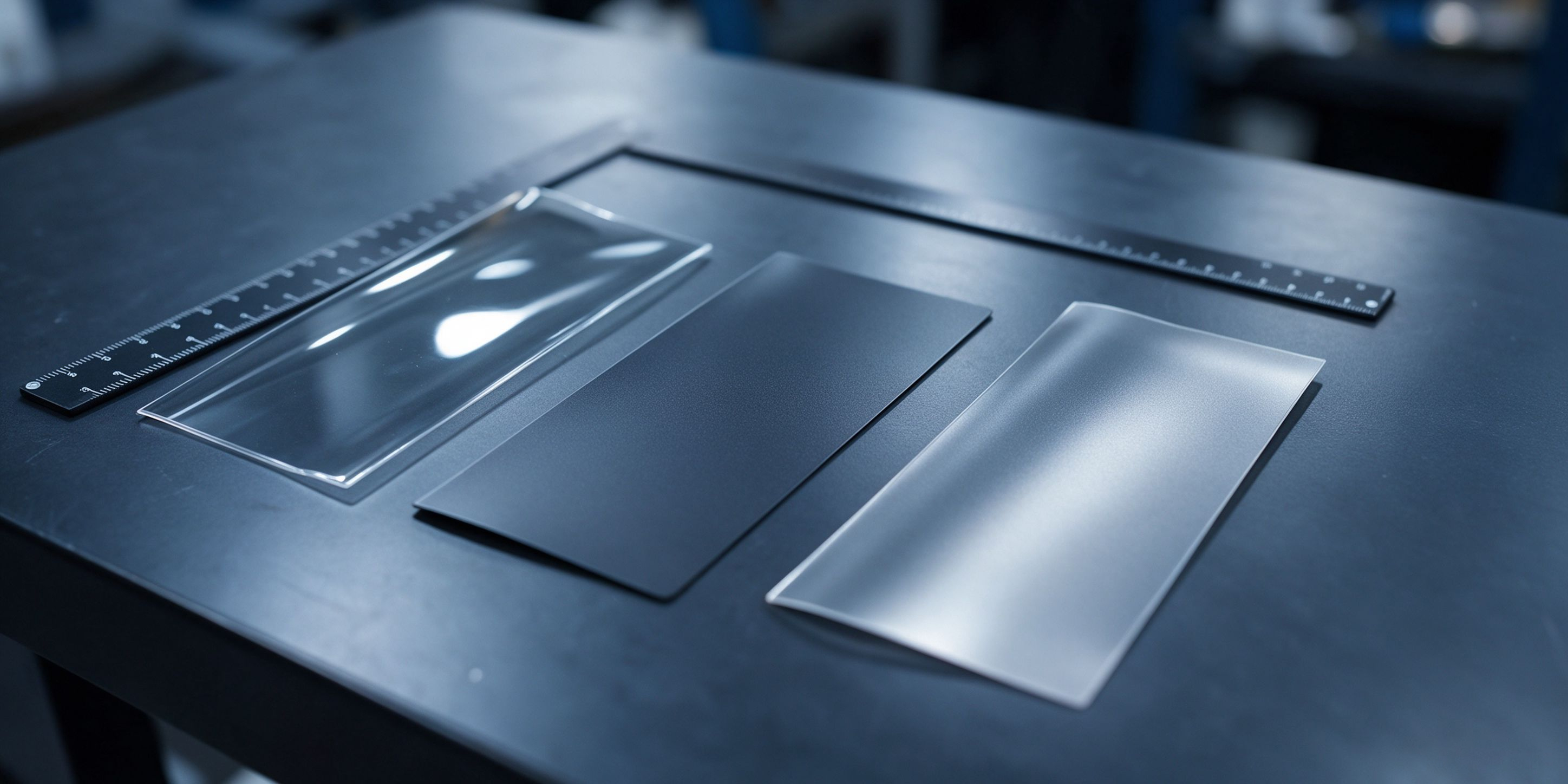
If you are sourcing from multiple PPF suppliers, avoid judging each product using different testing methods.
A consistent evaluation process makes the results easier to compare.
For example, create a comparison sheet with the following categories:
| Evaluation Item | What to Check |
|---|---|
| Appearance | Color, clarity, gloss, and surface finish |
| Surface quality | Visible defects, contamination, and texture |
| Specifications | Material, thickness, width, and construction |
| Handling | Positioning and general installation behavior |
| Adhesion | Performance during installation and edge finishing |
| Supplier support | Technical information and response quality |
| Commercial terms | MOQ, lead time, pricing, and packaging |
You can also record photographs and testing notes for each sample.
This is particularly useful when several people in your business are involved in product selection. Instead of relying on personal impressions, your team can discuss the same evaluation results.
6. Understand the Limitations of Small PPF Samples
One important point that buyers should not overlook is that a small sample cannot represent every aspect of a full roll.
An A5 sample can help buyers make an initial assessment of:
-
Color and surface appearance
-
Gloss or finish
-
Basic material feel
-
Initial visual quality
However, it is generally not enough to fully evaluate:
-
Installation on large vehicle panels
-
Stretching over complex curves
-
Edge wrapping and finishing
-
Performance across a complete roll
-
Defect consistency throughout a production batch
If installation performance is an important purchasing requirement, ask the supplier whether a larger test piece or roll can be arranged.
For larger orders, buyers may also consider requesting a retained reference sample, confirming the approved product specifications in writing, and agreeing on applicable quality requirements before production.
A sample is a useful starting point, not a guarantee that every future production roll will be identical.
7. Confirm Bulk-Order Details Before Placing Your Purchase
After evaluating the sample, do not move directly to payment without confirming the commercial and product details.
A clear purchasing agreement helps reduce misunderstandings between the buyer and supplier.
Before confirming the order, check:
Product confirmation
-
Exact product model
-
Material and product construction
-
Approved color and surface finish
-
Confirmed product specifications
Order confirmation
-
MOQ and order quantity
-
Roll width and length
-
Packaging and labeling requirements
-
Unit price and total order value
-
Production lead time
Quality and delivery
-
Applicable quality inspection requirements
-
Procedure for handling quality concerns
-
Shipping terms and delivery arrangements
-
Warranty coverage, if offered for the selected product
For repeat orders, buyers should also discuss how product specifications and quality requirements will be maintained between batches.
Written confirmation is especially important when the sample has been approved as the reference for a larger order.
8. Questions to Ask Your PPF Supplier
Before placing a bulk order, consider asking your supplier:
-
Is the sample from the same product model that will be supplied in the bulk order?
-
Can you provide the technical data sheet for this specific model?
-
Are the available roll dimensions and specifications confirmed?
-
Can you arrange a larger test piece for installation evaluation?
-
How do you manage product quality and consistency between batches?
-
What is the MOQ and estimated production lead time?
-
What packaging and private-label options are available?
-
What warranty terms apply to this particular product, if any?
A reliable supplier should be able to explain the relevant product information and clarify which details need to be confirmed before production.
Frequently Asked Questions
Are PPF samples usually free?
Sample policies vary between suppliers. Some suppliers provide small samples free of charge, while others may charge for the sample or its delivery.
Buyers should confirm the sample size, availability, and shipping cost before requesting one.
Is an A5 sample enough to test PPF quality?
An A5 sample is useful for an initial check of color, surface appearance, gloss, and material feel.
However, it is not sufficient for evaluating every installation characteristic, such as stretching over large panels, edge wrapping, and full-roll consistency. A larger test piece is more suitable for those evaluations.
Should I test PPF before placing a bulk order?
Yes. Evaluating a sample can help identify potential concerns before a larger purchase.
It is also a good opportunity to check whether the product specifications match your requirements and whether the supplier can provide the technical information and support your business needs.
What should I do if the bulk order looks different from the approved sample?
First, compare the delivered product with the approved sample and the written product specifications.
Document any differences with photographs and relevant order information, then contact the supplier to discuss the issue. This is one reason why keeping an approved reference sample and confirming specifications in writing can be valuable.
Can a sample guarantee the quality of the entire bulk order?
No. A sample provides an initial basis for evaluation, but it cannot guarantee that every roll in a production batch will be identical.
Buyers should also confirm the supplier's quality control procedures and agree on appropriate inspection requirements for the order.
Final Thoughts
Evaluating PPF samples is more than simply checking whether a film looks good. It is a practical step that helps buyers understand the product, assess its suitability for their market, and clarify important details before making a larger investment.
For distributors, importers, installers, and private-label businesses, a careful evaluation process should cover product appearance, technical specifications, installation behavior, supplier support, and bulk-order conditions.
Taking the time to evaluate samples properly can help reduce purchasing uncertainty and build a stronger foundation for long-term cooperation.
At Guangdong AICI New Materials Co., Ltd., we provide automotive film solutions including TPU paint protection film and PVC color change film. We offer free A5 samples for an initial evaluation of color, surface appearance, and material feel. Customers only need to cover the international shipping cost.
If you are considering a new PPF supplier, contact our team to discuss product options and request samples before planning your next order.
TPU PPF Wholesale Price: What Affects the Cost per Roll?
TPU PPF Thickness: What Buyers Need to Know